Hairstyles · Style guide
10 Easy Everyday Hairstyles With Clear Steps and Different Looks
Explore ten easy everyday hairstyles with clear steps, accessory lists, hair-length guidance, and fixes for common styling problems.
Explore the guide ↗Troubleshoot a slipping claw clip with checks for section size, fold, grip placement and comfortable alternatives for fine, thick, curly or layered hair.
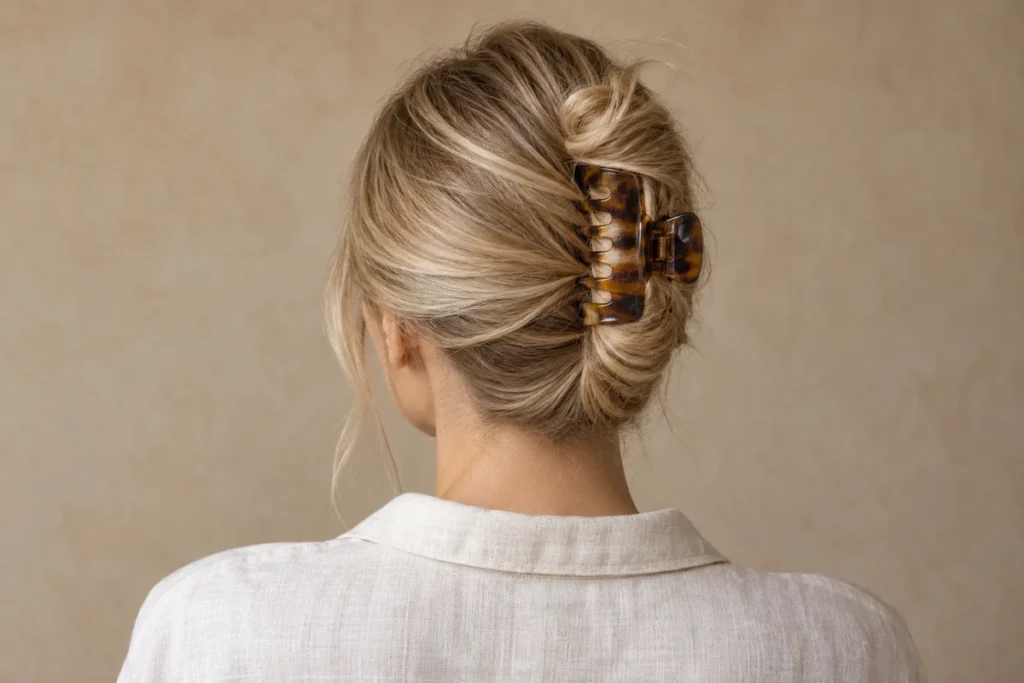
A claw clip that slides down your hair is frustrating, but pulling the twist tighter is not always the answer. Start by checking how much hair sits inside the clip, whether both rows of teeth catch the hairstyle, and where the weight rests.
Before buying another clip, watch what moves: the whole twist, one side of the fold or only the loose ends. The checks below separate those problems. Start with your existing clip and change one thing at a time; a half-up section can show whether the full bundle is simply too much for it to hold.
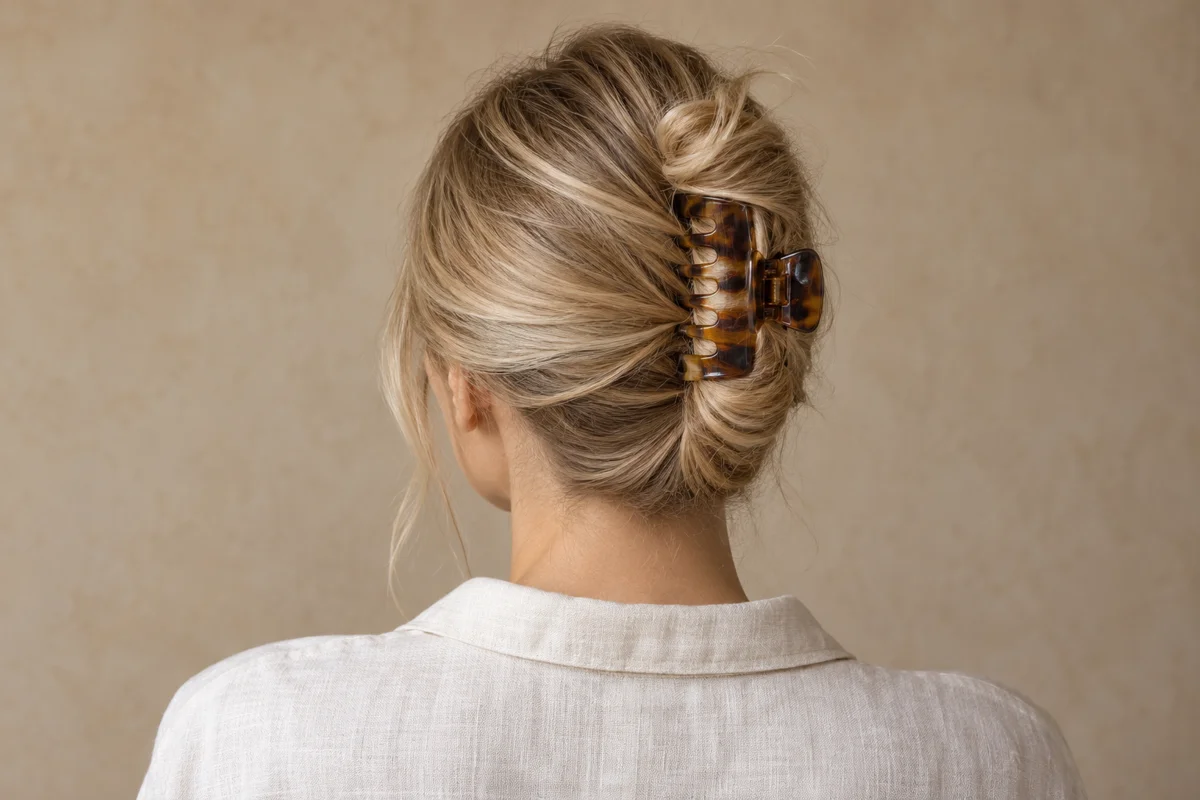
Watch what happens when you release your supporting hand. Does the whole twist move downward, do just the ends fall out, or does the clip open away from the hair? Those are different problems. Reset the style before each adjustment so you can see whether the change helped.
| What happens? | Check first | Try next |
|---|---|---|
| The whole twist slides | Whether the teeth catch hair on both sides of the fold | Reposition across the twist, or try a smaller gathered section |
| The jaws cannot close | How much hair is packed inside | Use a half-up section or a clip with more room |
| Only the ends escape | Where the ends finish after folding | Tuck them into the supported section before clipping |
| The clip tilts backward | Whether a heavy length hangs beyond its grip | Make a shorter fold or lower the placement |
| It holds but hurts | Teeth pressing against the scalp or pulling sections | Release the style and reposition; do not keep tightening |
Open and close the empty clip with your hand. Look for missing teeth, rough edges, an uneven hinge or jaws that do not return together. A damaged accessory can catch hair even when the hairstyle is simple. Set it aside if it snags or no longer closes normally.
Clip length is only one part of fit. Two accessories that look equally long can have different space between the jaws and different tooth shapes. Compare the room available for your folded hair, rather than choosing solely by the overall size or decorative shape.
You do not need a new collection to make this check. If you own two clips, try them on the same gathered section. Keep the technique and amount of hair similar. The useful question is whether each one closes and supports the fold comfortably, not which looks larger on the dressing table.
Gather the hair loosely in one hand and imagine the folded section the clip needs to hold. If the jaws must stretch over a bulky bundle and remain visibly forced apart, reduce the amount of hair. Pushing harder does not create more room inside the accessory.
For a half-up version, begin with a modest section from around the temples and crown. Leave the lower lengths loose, twist the gathered section once or twice, and secure it. If that holds while the full updo does not, you have found a workable way to use the clip without changing your haircut.
Equally, a very roomy clip can feel awkward around a small section. If the hair shifts freely inside it, try a more compact fold or a smaller section-appropriate accessory you already have. Avoid adding unnecessary hair simply to fill an oversized decorative clip.
This is a useful starting technique because you can see where the fold and fastening meet. Use dry hair arranged in its usual texture. You need a claw clip, a mirror and, if you have one, a second mirror to check the back.
The exact amount of turning depends on your length and how the hair gathers. Stop if the twist begins pulling. For a broader introduction to this technique and other fastenings, see our easy everyday hairstyle guide.
A clip can look closed while holding only the outer surface of a twist. Check its placement from the back: both sides should support the gathered shape. If one row of teeth sits on top of a bulky fold, reopen the jaws and place them around a smaller section.
Keep your hand beneath the twist while testing the position. That lets you release and reset without dragging the accessory through loose lengths. Once the clip is in place, lower your supporting hand gradually and check whether the style remains where you put it.
A visible clip is perfectly fine. Hiding every tooth under hair can make the fastening harder to check. Secure the main shape first; arrange a few surface pieces afterwards if you prefer a softer finish.
Long ends can produce a large loop above the clip or a heavy tail beneath it. Before changing accessories, try folding the length into a shorter, flatter shape. Place the clip where it supports that fold, not just at the end of the twist.
If several layers of folded hair will not fit, stop trying to compress them into the same space. Gather only the upper half, use a lower placement that your clip can support, or choose another fastening. Our low-bun option is another way to gather the length when a clip is not cooperating.
For a style that lasts through your plans, check it with your collar and outerwear. A raised collar can push against a low clip. Move the accessory or choose a different style instead of leaving it balanced against clothing.
If the whole shape moves inside the accessory, first check whether the jaws are enclosing too little hair to grip the fold. Try a compact twist rather than a wide, loosely spread shape. Reposition the teeth so they support both sides, then release your hand slowly.
Keep product changes separate from fastening changes. Adding more oil or smoothing cream just before trying again can make it harder to tell why the grip changed. Start with the hair as it is and adjust section size and placement first.
Leave the decorative fan of ends until the fastening works. If the compact fold holds but loosening it makes the clip slide, return to the compact version. You have changed the shape inside the jaws, so the looser finish may need a different placement rather than more product.
For curls or coils, gather gently with your fingers when that preserves the definition you want. You can leave the lower lengths loose and secure a small upper section without brushing the whole hairstyle into a new texture.
Short layers may fall outside a full twist because they cannot reach the fastening. Check which sections are escaping. A face-framing piece can remain loose, while a small side section may be secured separately if you want it off your face.
A bob does not need to become a full updo. Try a small half-up twist or a clipped side instead. If a section will only reach when you pull the hairline, choose a closer fastening point. The side-swept bob in our everyday guide shows a different way to use a small accessory.
Some claw-clip looks intentionally leave a short fan of ends above the accessory. That is different from an unsupported loop dropping out of the jaws. Decide which finish you want before adjusting it.
For tucked ends, fold them into the supported part of the twist before closing the clip. For a visible fan, keep the base secure and arrange only the ends that remain above it. Avoid pulling large sections upward after fastening, because that can change how much hair sits inside the jaws.
If you cannot control the finish, keep the shape compact. A simple twist with a visible clip often needs fewer adjustments than an elaborate arrangement that depends on several loose loops.
Turn your head, look up and down, and try on the clothing you will wear. Reopen and reposition anything that presses or pulls. The hairstyle should not depend on tolerating discomfort.
The American Academy of Dermatology advises avoiding repeated tension from tight hairstyles. That is a reason to loosen a pulling style, not to keep adding tighter fastenings when a clip slips. If you notice hair loss or persistent scalp symptoms, seek individual advice from a qualified clinician.
Remove the accessory by supporting the gathered hair, opening the jaws fully and lifting it clear. Do not drag closed teeth down through the twist. If a strand is caught, pause and free it gently rather than pulling the entire clip away.
Not automatically. Start with the amount and shape of hair you want to gather. Length alone does not tell you how much room a folded updo needs. Check whether the clip closes over the section and supports it without pressing.
The full style asks the accessory to hold a larger bundle and support more length. Keep the half-up version if it is comfortable. A different clip or a different fastening may be more suitable for a complete updo.
No straightening step is required for the twist described here. Work with your usual texture and a gathered section you can handle. Change the size of the section or leave more hair loose if that makes the fastening easier.
You can choose a ponytail-based style if that is familiar, but treat the elastic and clip as separate fastenings. Keep both comfortable. If adding an elastic makes the bundle too bulky, return to a smaller section rather than forcing the jaws around it.
Set the clip aside for a smaller half-up look and use a fastening that works with your hair today. For a dressed-up alternative, our occasion hairstyle guide includes ribbon ponytails, bows and headbands built around familiar shapes.
Use a three-line note: “What moved?”, “What did I change?” and “Did it hold comfortably?” For example: “The full twist slid; I kept the same clip and gathered only the upper half; the smaller fold stayed in place.” This is a comparison you can make at home, not a guarantee that one clip will suit every style.
Use the same mirror angle for each attempt. When a version holds, note the clip position and the section you gathered. Start there next time before changing the part or arranging loose front pieces.
If the jaws cannot close, reduce the bundle. If the whole twist slides, check the grip around the fold. If only the ends escape, tuck them into the supported section. Release anything that hurts; a different fastening is a reasonable next step when the clip still will not hold.
Zaki is a professional hairstylist and Rafaa is a professional nail stylist. Explore our guides for styling ideas, practical steps and details to help you choose your next look.
Meet the team · Editorial & image policy · Suggest a correction
Explore ten easy everyday hairstyles with clear steps, accessory lists, hair-length guidance, and fixes for common styling problems.
Explore the guide ↗
Choose a hairstyle by where your fringe ends actually reach. Compare side placement, twists, clips and headbands without an invented growth timetable.
Explore the guide ↗
Find out where your heatless set loses its shape: wrapping, waiting, release, finishing or wear. Change one variable at a time with a simple…
Explore the guide ↗