How to Wear a Hair Scarf: Three Ways With a Separate Secure Base
Try a scarf around a ponytail, bun or headband arrangement. Match the fabric and fastening to the look, keeping the scarf separate from the supporting base.
If a hair scarf keeps slipping, ask what job it is doing. A scarf decorating a ponytail should not have to hold the ponytail together. A band across loose hair needs a comfortable position, not an increasingly tight knot. Separate the hairstyle’s support from its decoration and the adjustment becomes easier to understand.
The three arrangements below are styling suggestions for an ordinary decorative scarf. They are not instructions for religious head coverings or protective medical garments. Use the material, coverage and fastening that suit your own purpose.
Match the fabric to the amount you want to show
Compare the visible pattern and bulk before placing the scarf in the hair.
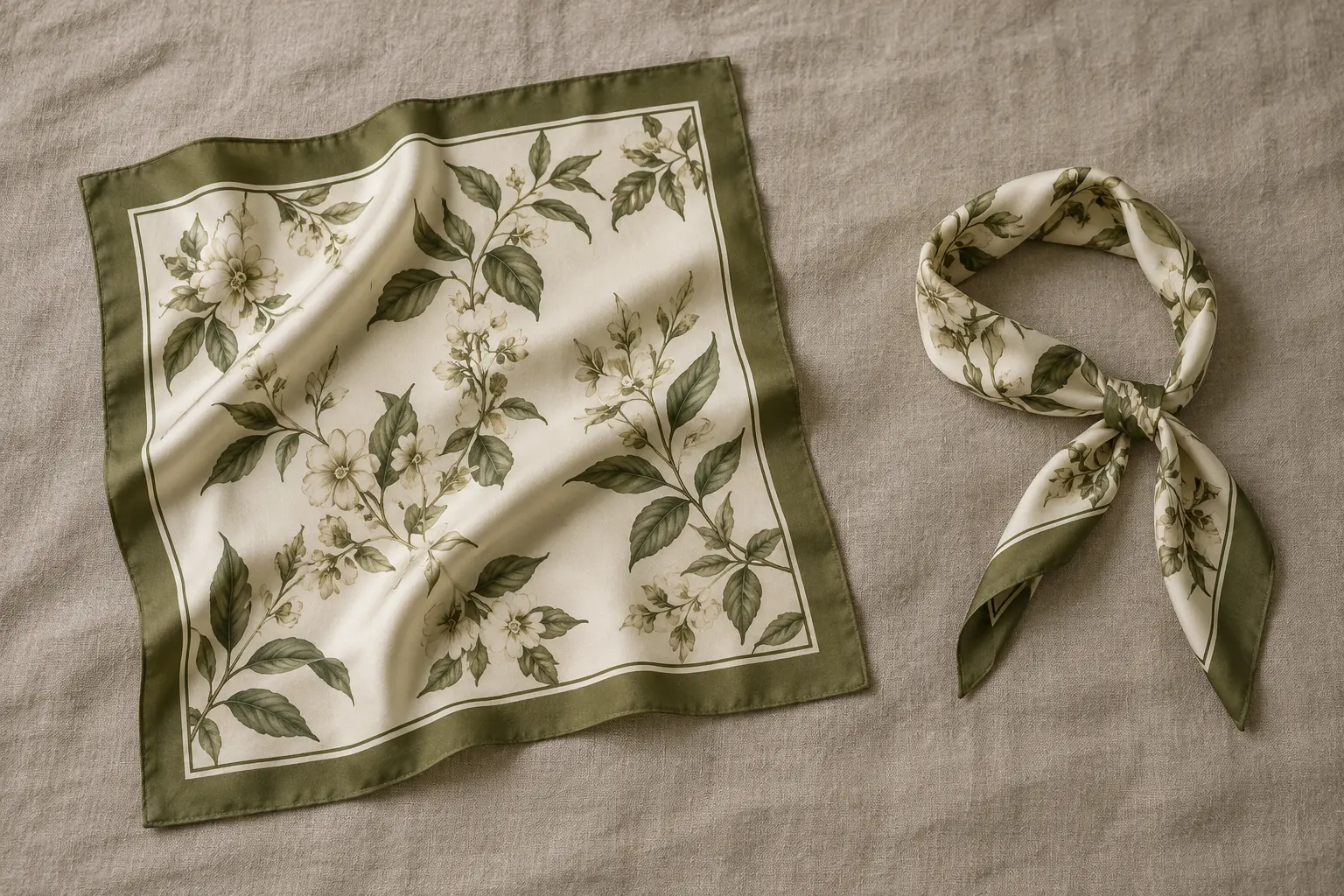
Lay the scarf flat and decide which part of the pattern should be visible. A wide fold shows more print but can create a bulky knot. A narrow fold makes a smaller accent but may twist and hide the design. Try the fold before putting it on your head.
A long rectangle can leave tails beside a ponytail; a folded square can make a band with shorter ends. Labels such as silk or satin do not tell you how thick, slippery or heavy the scarf will feel once folded. Compare the scarf you actually own, rather than buying by a material name alone.
Arrangement
What supports the hair?
What the scarf adds
First adjustment if it moves
Ponytail wrap
A comfortable hair elastic
A knot, bow or tails
Shorten heavy tails and check the wrap around the base
Headband-style fold
The fold’s placement and comfortable knot
A visible strip of colour
Reposition before tightening
Bun accent
The bun’s existing elastic or pins
A small colour accent
Reduce bulk so decoration does not displace the fastening
Use this as a job map. A separate base does not mean adding lots of tools. It means knowing which element should still hold when you take the scarf away.
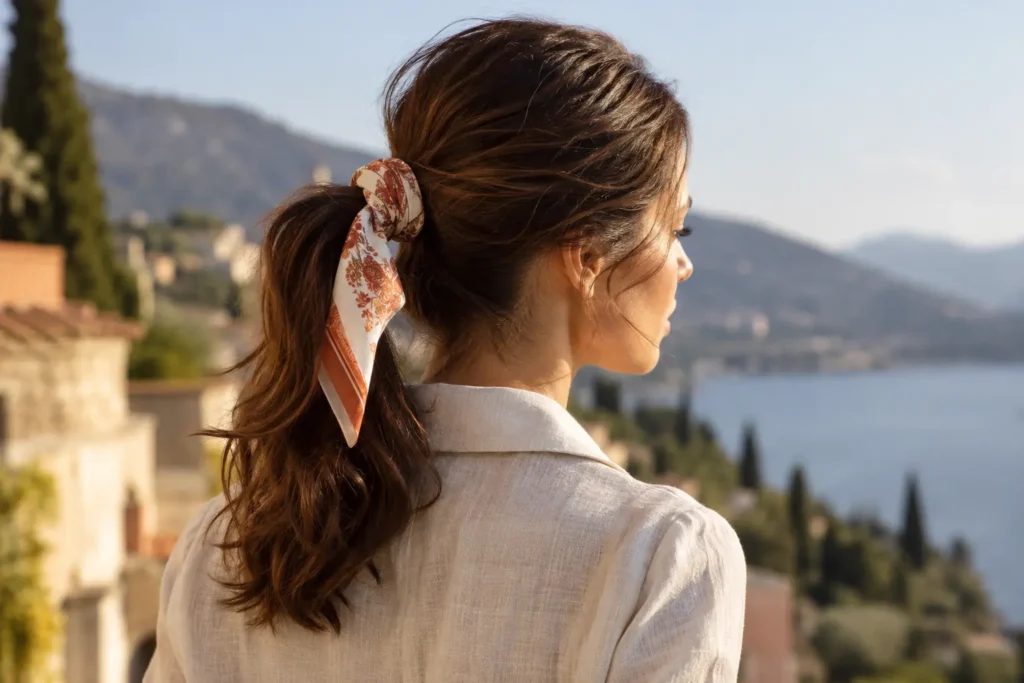
A ponytail wrap with controlled tails
Make a familiar ponytail and check it without the scarf. It should hold comfortably on its own. If it slides, solve that base first; a decorative knot can hide the problem without fixing it.
Fold the scarf to the width you want, place its centre around the base and tie the ends in a comfortable position. Arrange the tails where you can see them in the mirror. Keep them clear of anything they might catch on during your normal activities.
A knot on top makes the accent more visible from the front or side; one beneath the ponytail can leave the upper shape quieter. Try both before deciding. Do not keep wrapping merely to use every centimetre of fabric: excess bulk can make the base feel crowded.
Move your head, put on your coat and sit against the chair you expect to use. If the knot presses at the nape, move it or shorten the arrangement. A scarf that looks balanced from behind may be uncomfortable during a long journey.
For a simple ponytail foundation, see our everyday hairstyle guide. Add the scarf after choosing the height and the amount of hair you want gathered.
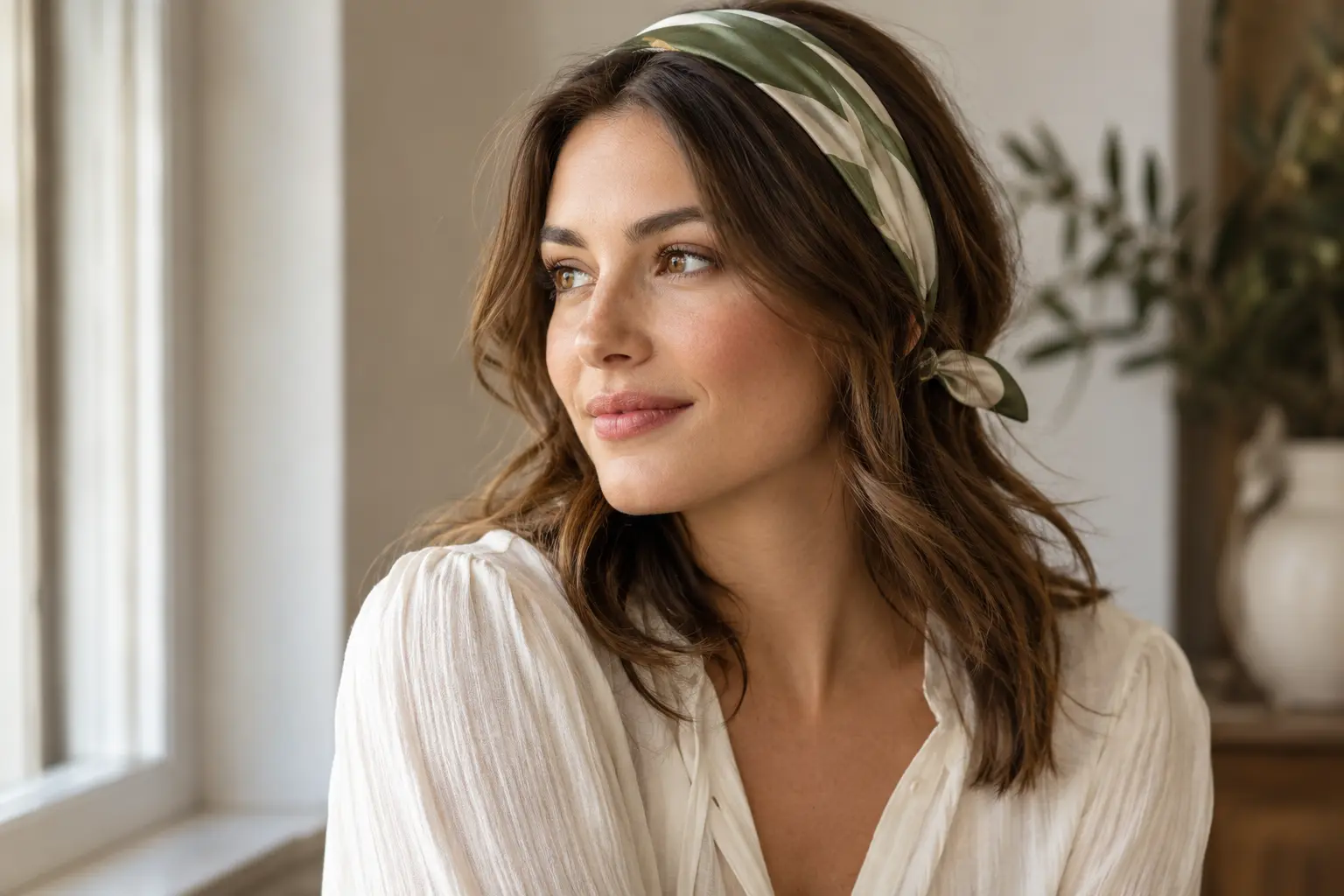
A headband-style fold that does not need constant tightening
Change the fold or placement before tightening a slipping scarf.
Start with loose hair arranged as you intend to wear it. Fold the scarf into a band and place it where it can rest without pushing painfully against the ears. Decide whether you want the front hair tucked beneath or left as face-framing pieces.
Tie where the knot can sit comfortably. Check the weight and position of the tails. If the band slips backwards, reset it and compare a different placement or fold before increasing tension. A smooth fabric and a steep angle may be a placement problem rather than a knot problem.
A small discreet pin may help with a suitable arrangement, but it should catch hair and fabric without pressing sharply into the scalp. Our pin guide explains why a small bobby pin and an open bun pin have different jobs.
If you cannot make the scarf comfortable, use a different accessory that day. A preformed band may suit the task better than a scarf, or the scarf may work as a ponytail accent instead. Not every piece needs to perform all three styles.
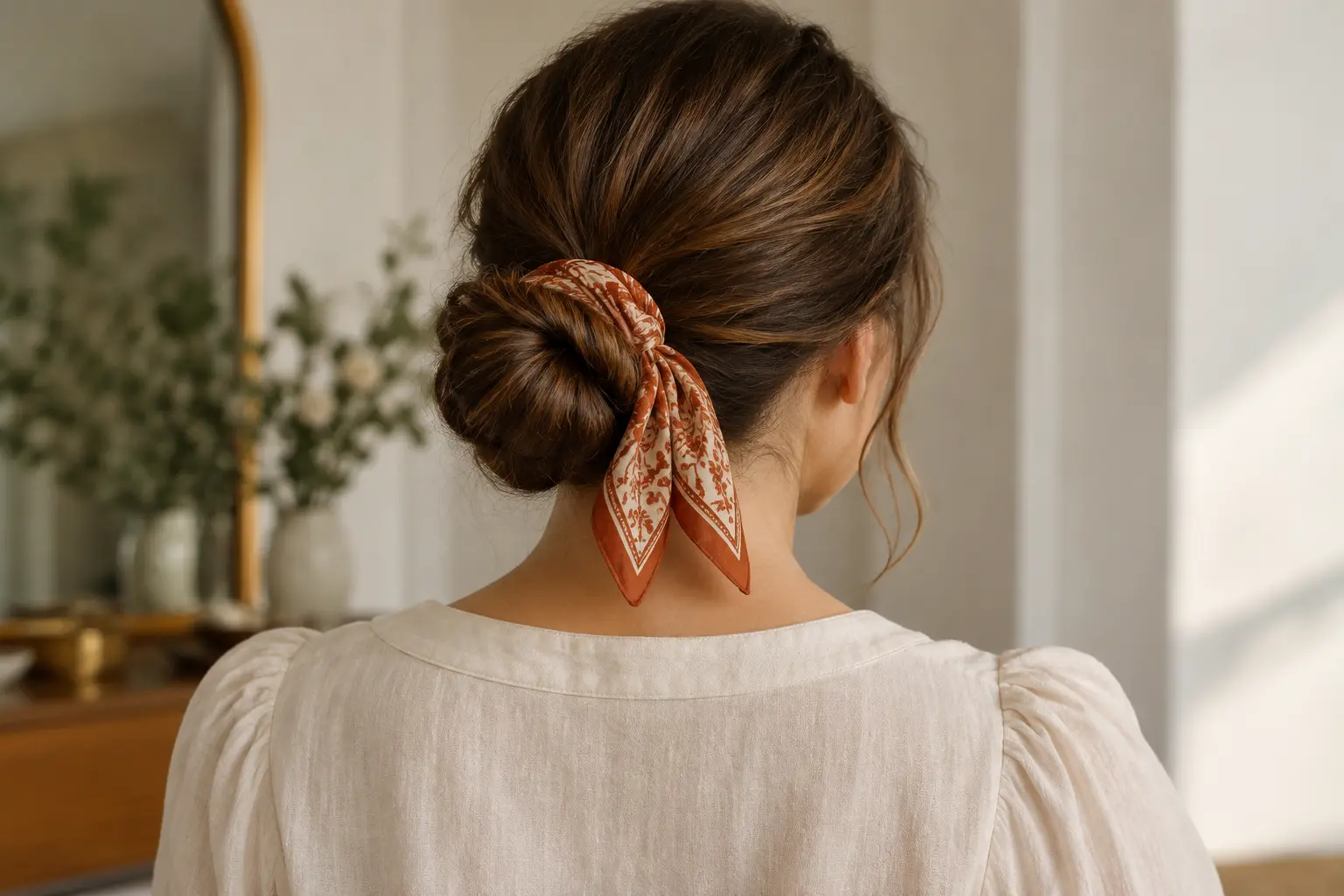
A bun accent with a visible fastening underneath
Keep the scarf decorative and the bun fastening independent.
Make the bun using the technique and fastenings you already know. Check its hold before covering the base. Choose a narrow scarf fold so you can add colour without concealing every point where the bun is supported.
Wrap or tie the scarf around the base as decoration, keeping it away from pin ends and any clip hinge. If it pushes a fastening out of position, reduce the bulk or change where you tie it. Do not force a clip’s jaws around the combined bun and fabric.
Our claw-clip troubleshooting guide separates bundle size from grip placement. The same distinction is useful here: adding a scarf changes the bundle, so the old clip position may no longer do the same job.
Keep long tails from dragging through food, work equipment or moving objects. Choose another arrangement for activities where loose fabric can catch. Decoration should fit what you are doing, not require you to avoid ordinary movement all day.
Fold and tie a ponytail accent step by step
Start with the ponytail already secured. Remove the scarf for a moment: if the hair falls apart without it, fix the base before decorating. You should be able to change the scarf without rebuilding the hairstyle.
Fold the scarf on a flat surface into a band that shows the part of the pattern you like. Keep the fold even enough that one side is not carrying all the bulk.
Place the centre around the ponytail base. Bring the ends into a position you can reach without twisting your head awkwardly.
Tie the decoration in the arrangement you prefer, then inspect it from the side and back. Do not keep adding wraps just to use spare fabric.
Move the tails so they are controlled and clear of the collar. If you cannot achieve a comfortable length, choose a smaller scarf or another arrangement.
A simple knot can make the pattern clearer than a crowded bow. If the fabric cannot hold the arrangement comfortably, use a different scarf rather than depending on increasing tension.
Keep fabric away from the fastening mechanism
A scarf beside a claw clip needs space around the hinge and jaws. Do not close the clip on a thick fold because the hairstyle looked secure before you added fabric. Remove the scarf and compare the original hold; that tells you whether the decoration changed the bundle.
For a bun, locate every pin before taking the scarf down. Undo the decoration first when that leaves the base intact, then remove the supporting fastenings deliberately. This keeps a tangled knot from becoming a hair-removal shortcut.
Remove it in the reverse order
Locate the knot and supporting fastenings before pulling the scarf away. Remove a pin deliberately, loosen the fabric and support the hair. Do not drag a tight knot through a ponytail or unwind a wrap blindly around hidden pins.
Check the scarf for caught strands and follow its care label before cleaning. The result may be easier to repeat if you keep the successful fold rather than scrunching it back into a drawer. Photograph the fold and knot position if you want a reference.
The American Academy of Dermatology’s tight-hairstyle guidance discusses the importance of avoiding repeated pulling, including beneath head coverings. A decorative scarf should not create discomfort you accept for the sake of a neater edge.
For your next attempt, name the task first: “decorate my ponytail”, “hold the front area gently” or “add colour around a secured bun”. Choose one scarf, one fold and one fastening position. When the job is clear, you can change the pattern or tails without rebuilding the whole hairstyle.
A little context, from the team
Zaki is a professional hairstylist and Rafaa is a professional nail stylist. Explore our guides for styling ideas, practical steps and details to help you choose your next look.