New Year’s Eve Hairstyles: Choose by Coat, Neckline and the Way You’ll Celebrate
Choose New Year’s Eve hair around your coat, neckline and celebration. Rehearse the fastening and plan a simple repair for the evening on 31 December 2026.
A New Year’s Eve hairstyle needs to work before and after you take the coat off. A bun can press against a high collar, loose ends can disappear beneath a scarf and a sparkling clip can sit exactly where a bag strap brushes. Start with those practical details, then choose the decoration.
This guide plans for 31 December 2026, welcoming 2027. Use the outfit and event checks below to turn a familiar hairstyle into a comfortable occasion look.
Choose the evening before choosing the hairstyle
Name the setting: a seated dinner, a house gathering, dancing, an outdoor countdown or a combination. Then put the outfit and outerwear beside the mirror. You are not looking for a hairstyle that never moves; you are finding an arrangement you can wear and repair comfortably.
Evening plan
Starting shape to compare
Rehearsal question
Seated dinner with a high neckline
Side-pinned loose hair or a compact gathered style placed clear of the collar
Does the fastening press when I sit?
Dancing or lots of movement
A familiar ponytail or secured bun with modest decoration
Does the base hold before the accessory is added?
An outdoor countdown
A low-profile arrangement compatible with your own hat or covering
What happens when I put it on and remove it?
A quiet gathering at home
Your normal texture with one deliberate accessory
Is the extra technique doing a useful job?
These are starting points. Short layers, density and personal preference may make another shape more useful. Choose from what your hair can comfortably do rather than the name of a celebrity style.
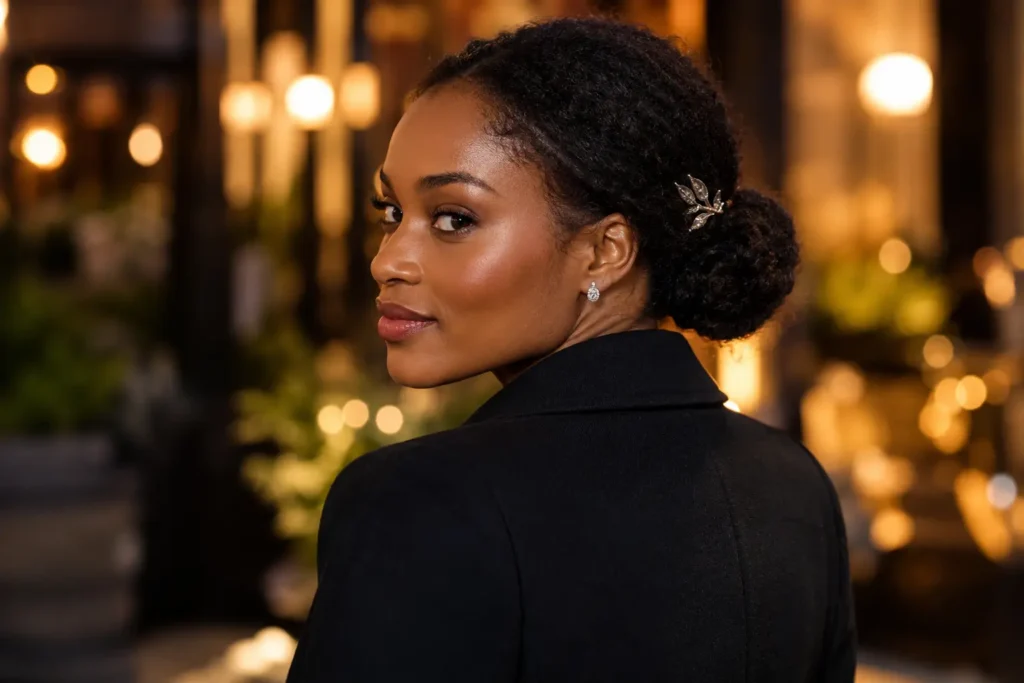
A side-pinned look for short hair or a detailed neckline
A side-pinned bob can make a complete occasion look without an imitation updo.
Arrange your hair in the texture you want to keep. Gather a small side section and place a suitable clip or pin where it can catch without stretching the front. Check the profile and the back, not only the front-facing mirror view.
Put on earrings and move your head. If loose strands catch, adjust that specific section rather than sweeping the whole style tighter. A small asymmetry can leave the neckline and accessory visible while retaining the rest of the texture.
For short hair, judge the reach of the side section. A bob does not need to become an imitation long updo. A deliberate part and a clear accent placement can make a complete occasion look.
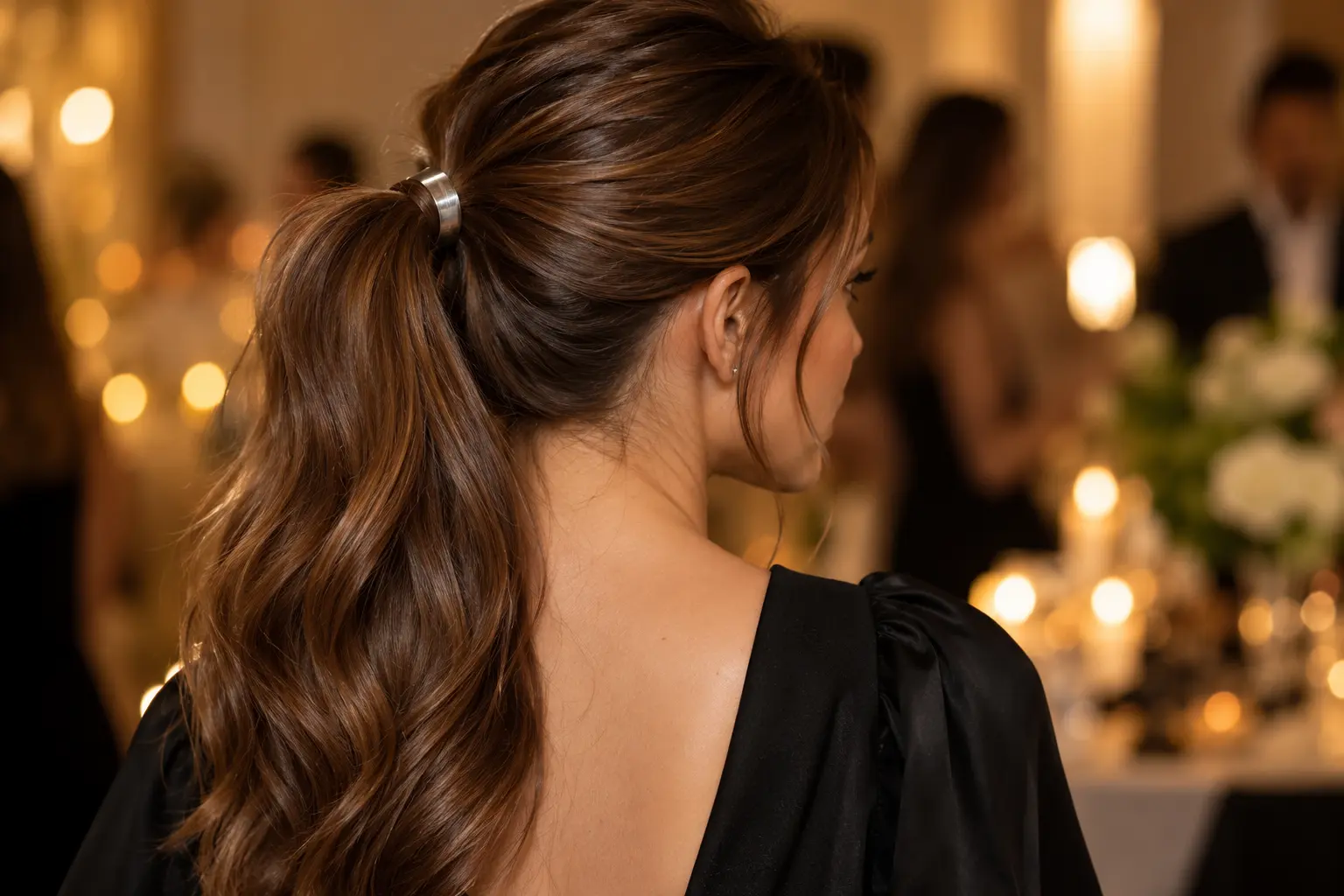
A ponytail with the decoration doing only one job
Check the ponytail base before adding the decorative cuff.
Choose a height that works with your neckline and coat. Make the ponytail and check the base without any ribbon, cuff or ornament. If it slides, reposition or adjust the gathering before adding decoration.
Keep the accessory separate from the supporting elastic. That makes it easier to remove, rearrange or replace without losing the whole hairstyle. If a cuff is heavy or pushes against the base, choose a different placement or a simpler accent.
Our everyday hairstyle guide includes familiar ponytail and gathered foundations. Practise one of those rather than learning an entirely new technique while getting ready for the event.
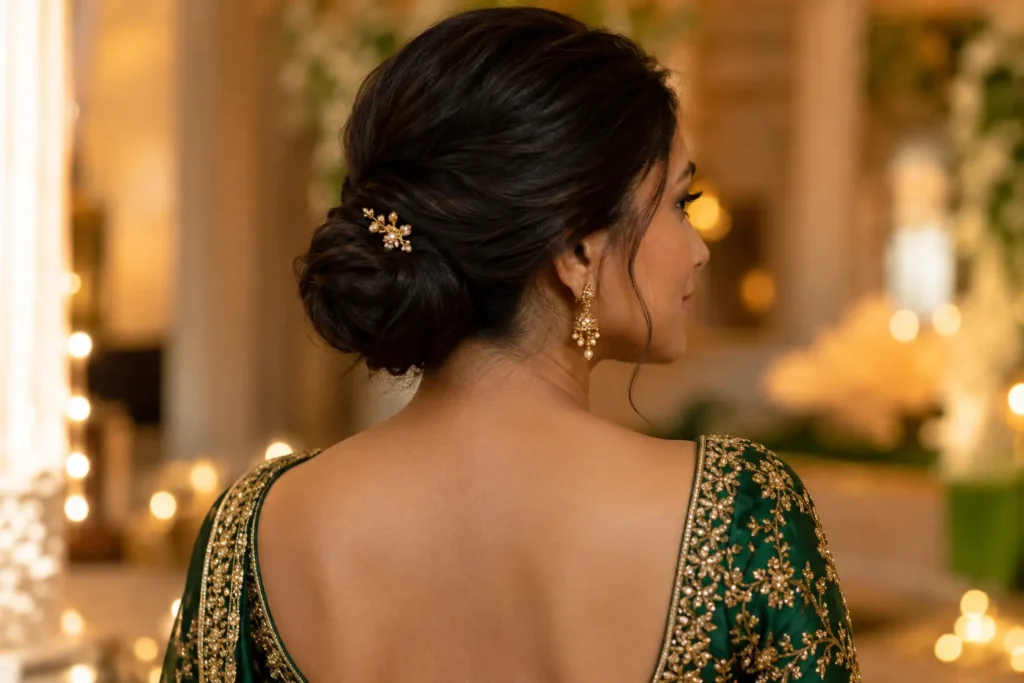
A compact bun with room for the collar
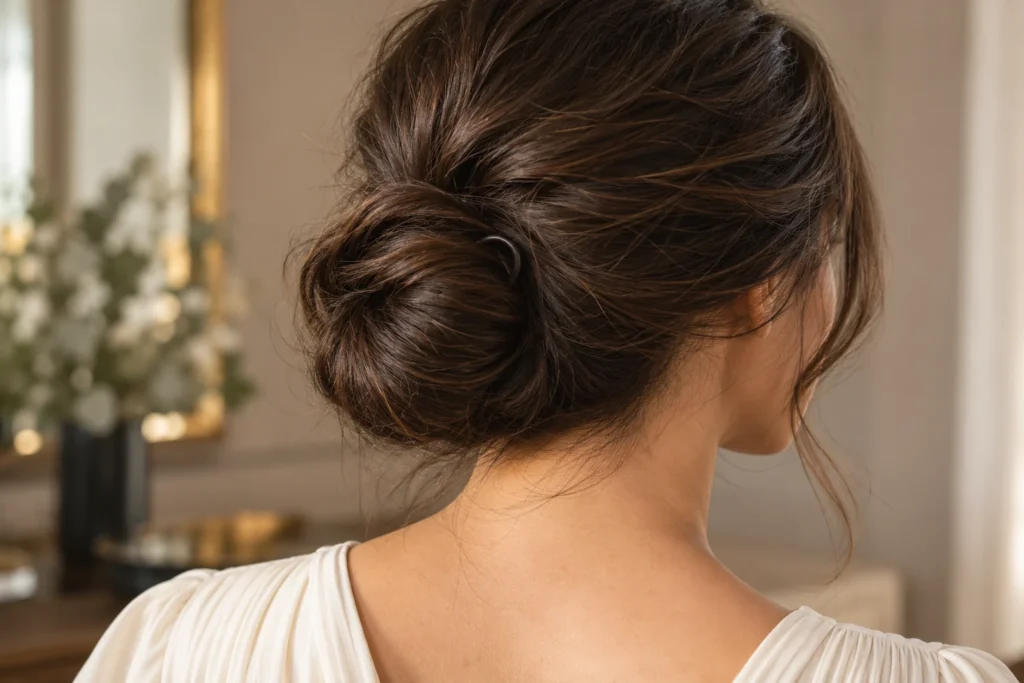
Place the base where the finished bun will clear the clothing you plan to wear. The lowest possible bun is not always the most comfortable choice with a tall or embellished collar. Make the shape, then sit and turn before decorating it.
Use pins for their actual tasks. An ordinary U-shaped bun pin can support part of a gathered shape, while a bobby pin can catch a small section or escaping end. Our pin comparison explains that distinction. More pins in the same place do not automatically create better hold.
Check that the decorative piece can be removed without dragging through the bun. If you need to take it out during the evening, know which part to release first. A hairstyle that you can understand from behind is easier to repair than one covered in hidden fastenings.
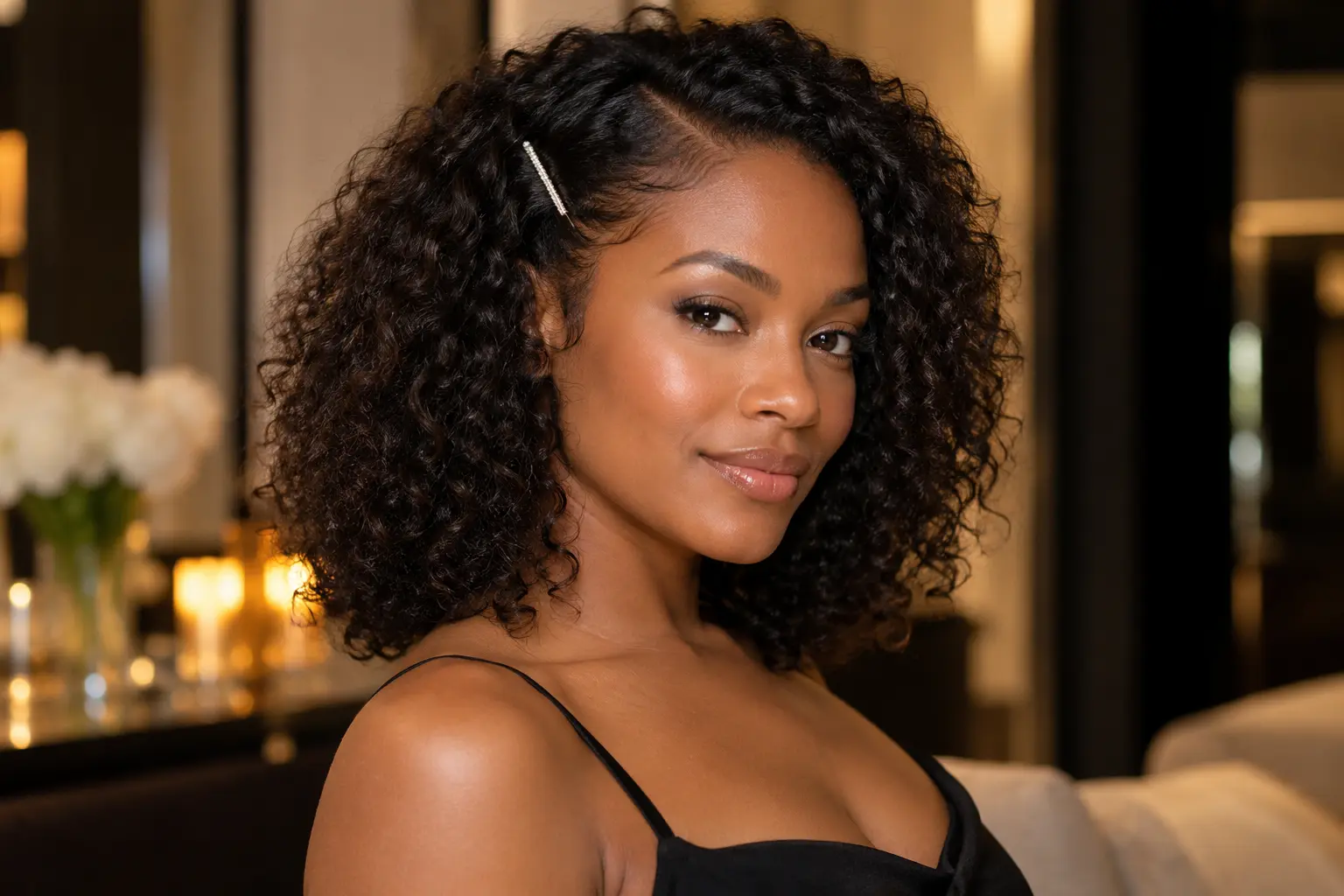
Loose texture with one deliberate focal point
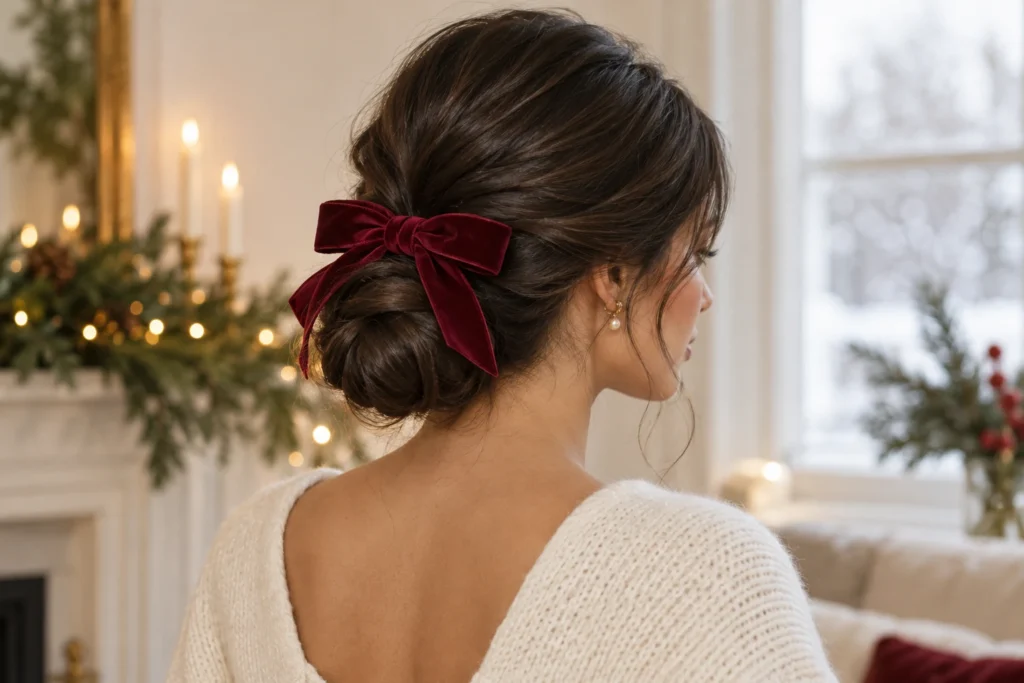
Keep the familiar texture and add one deliberate focal point.
Keep your natural texture or a styling method you already know. Add a small accent where it remains visible beside the outfit. A glittering slide or a simple ribbon can be enough; you do not need several ornaments to prove it is party hair.
If using heat, follow the tool and product instructions. Do not introduce a new high-temperature routine because an inspiration photograph looks unusually smooth. The AAD’s hair-damage guidance recommends limiting heat and using the lowest appropriate setting.
A familiar finish also helps you judge the accessory. If you change the curling method, parting, product and clip at once, you may not know which part caused a problem. Leave the experimental version for a rehearsal.
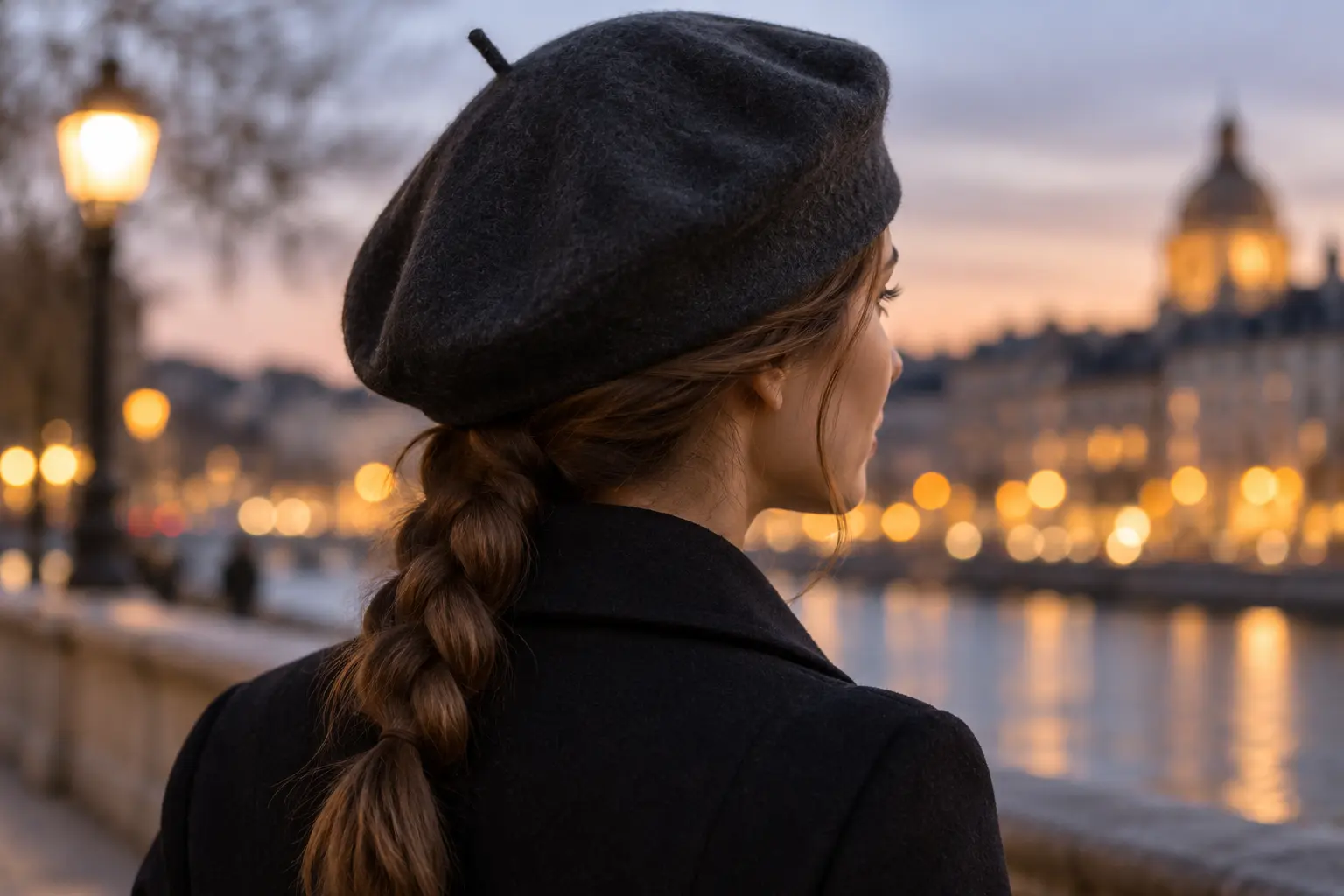
Try the outerwear sequence
Try the actual hat and coat together, then check the style again after removing them.
Put on the hairstyle, then the coat, scarf or covering in the order you expect to use them. Take them off again. Notice where fabric brushes the hair and which accessory catches. Make one placement change and repeat the sequence.
Do not tighten around the scalp simply to make the style smaller. Change its position, reduce decorative bulk or select another foundation. Release a fastening that causes discomfort. You should still be able to look down, turn and sit normally.
If the outing includes both indoors and outdoors, choose the version that can tolerate an ordinary reset. A small clip you can replace may be more useful than a complicated arrangement you cannot reach after removing a hat.
Carry a repair kit for the base you chose
Choose a spare elastic or a few suitable pins that match the actual fastening. Carry them where you can find them without emptying the bag. A photograph of the successful base can help you remember which section went where.
Avoid packing several products you have not used. The repair task is usually to restore the familiar shape, not rebuild a new hairstyle in a crowded bathroom. If the accessory is the only thing that has moved, fix that rather than taking the base down.
Our Christmas hairstyle guide has additional occasion references. Use this page’s outfit and movement checks to choose between them.
Make a simple party ponytail you can repair yourself
Start with your normal texture and an elastic you know how to use comfortably. A new accessory is easier to judge when the foundation is familiar. Choose the height with the coat collar visible in the mirror.
Gather the amount of hair that reaches the base without stretching short front pieces. Keep any deliberate face-framing sections separate.
Secure the ponytail with the elastic and release your hands. Turn, look down and sit before adding decoration.
If the base slides, reset its position or reduce the gathered bulk. Do not ask a decorative cuff to clamp an unstable ponytail in place.
Add one light accent, then repeat the coat-on and coat-off sequence. Keep a spare elastic accessible if that is the fastening you will need to restore.
A short-hair version without a ponytail
Create the part you like and pick a small side section that can reach its anchor. Secure it above or behind the ear with a suitable slide, leaving the rest of the bob or crop in its usual texture. Put on earrings before deciding where the loose ends should sit.
The accessory does not need to disappear. One visible slide can be the focal point, especially with a detailed neckline. Check that it releases easily and does not catch the earring when you turn. If it presses against glasses, move that one fastening rather than tightening the entire side section. A workable party style should still feel ordinary enough to forget about for part of the evening.
Finish the plan with one sentence
Try: “A comfortable low-profile base, clear of this collar, with this one clip and a repair I can do myself.” Replace each part with your own priorities. If you cannot name the priorities, remove an extra technique until the plan becomes clear.
Practise before 31 December, photograph the arrangement you want to repeat and leave enough time on the day to check the whole outfit. The hairstyle’s job is to fit the evening you have planned, not require you to spend it protecting the hairstyle.
A little context, from the team
Zaki is a professional hairstylist and Rafaa is a professional nail stylist. Explore our guides for styling ideas, practical steps and details to help you choose your next look.
Choose Diwali hair around earrings, neckline and dressing order. Use a fastening rehearsal to check comfort, visible detail and accessories before the event.