Diwali Nail Ideas: Match the Detail to Your Outfit, Not Every Colour
Plan Diwali nails around one outfit detail, with balanced colour, metallic accents and practical placement. Includes a choice framework for November 2026.
Start your Diwali manicure with one part of the outfit: the main fabric, the jewellery or a detail in the embroidery. You do not need to repeat every colour on every nail. A clear choice about what should stand out makes the salon brief easier and leaves room for the clothes and accessories you already want to wear.
For 2026 planning, Drik Panchang lists Diwali on 8 November. Local observances and family celebrations can span different days, so use your own event date when booking. The designs here are optional festive styling ideas, not a claim about what anyone should wear for a cultural or religious celebration.
Choose the part of the outfit the nails will echo
Place your fabric or a clear photograph beside any jewellery you plan to wear. Select one anchor. If the fabric is richly patterned, a solid nail colour can provide contrast. If the clothing is plain, a small metallic detail can become the manicure’s focal point.
Do not decide from the outfit’s colour name alone. A wine fabric may look red in daylight and plum indoors. Compare a physical polish swatch where possible. A photograph can help communicate the direction, but its lighting and screen settings are not a precise colour measurement.
Outfit detail
Nail direction to compare
Keep restrained
Dense gold embroidery
A solid jewel colour with one fine gold accent
Several unrelated motifs
A plain jewel-toned outfit
A shallow metallic tip or small cuticle arc
Large raised decoration if you dislike catching
Pale fabric with subtle shimmer
A sheer or softly opaque base and a fine accent
An exact screen-based “match”
Mixed-metal jewellery
One deliberately chosen metal, or a quiet plain finish
Trying to repeat every accessory
These are composition choices, not rules about which colours suit particular skin tones or traditions. Compare the options beside your own hands and fabric, then keep the combination you enjoy.
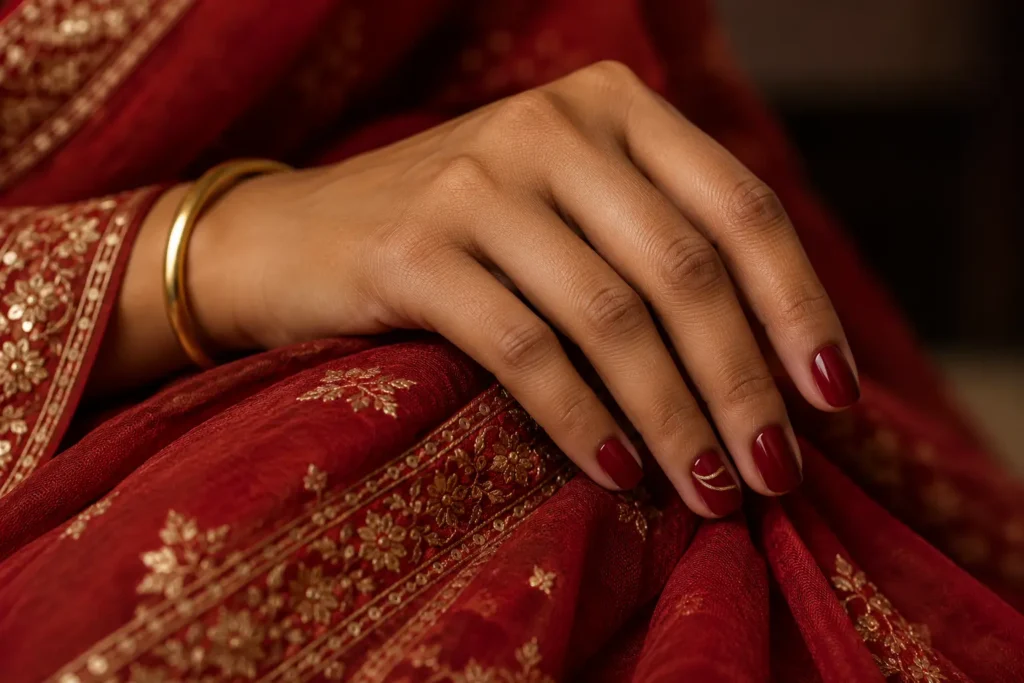
Ruby colour with a quiet metallic edge
A deep red or ruby base can carry the manicure while a narrow metallic edge adds a festive detail. On a short nail, keep the edge proportionate to the visible surface. It should read as a line rather than occupy most of the tip unless that bold block is what you want.
Specify whether you mean metallic lacquer, glitter or chrome. They create different kinds of reflection and may involve different systems. A salon reference should show the finish clearly, with one alternative in case that effect is unsuitable for your chosen product or length.
Our burgundy and gold guide shows distinctions between reflective colour and painted accents. Borrow the finish vocabulary without needing to borrow its Christmas motifs.
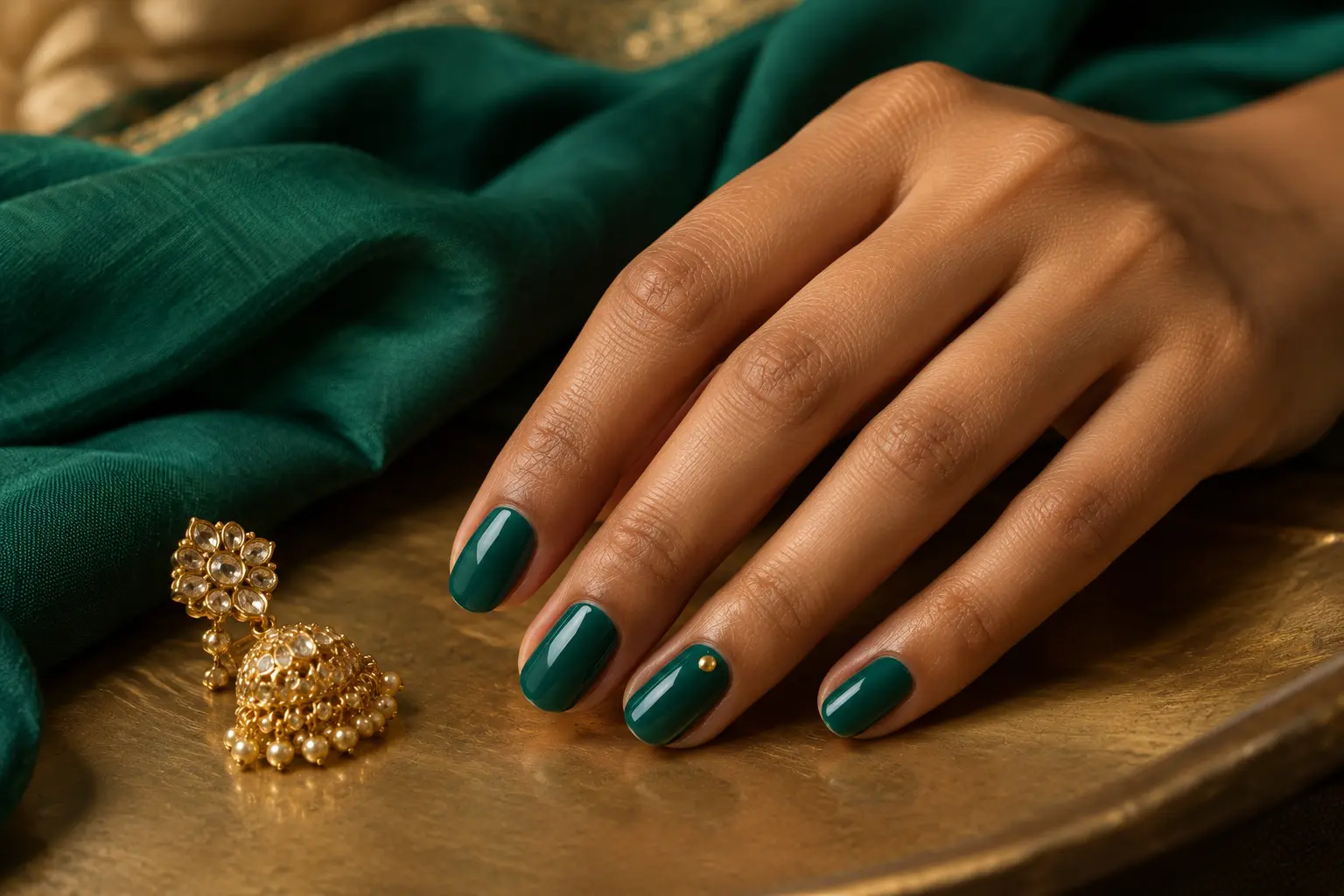
Emerald with an off-centre accent
Keep most nails plain when the colour is already the focal point.
Try a rich green base with a small accent on one or two nails. Positioning a fine line or small dot away from the middle leaves a larger area of colour uninterrupted. The idea is a restrained balance between solid colour and detail, not a universal geometric formula.
Compare the green in ordinary light. A deep shade can read nearly black in a dim room, while shimmer can make another appear much brighter. Ask to see the shade and finish before discussing several layers of artwork.
If you want a compact design, let one accent placement repeat. A small gold detail near the base on two nails can feel more deliberate than a different decorative idea on every finger.
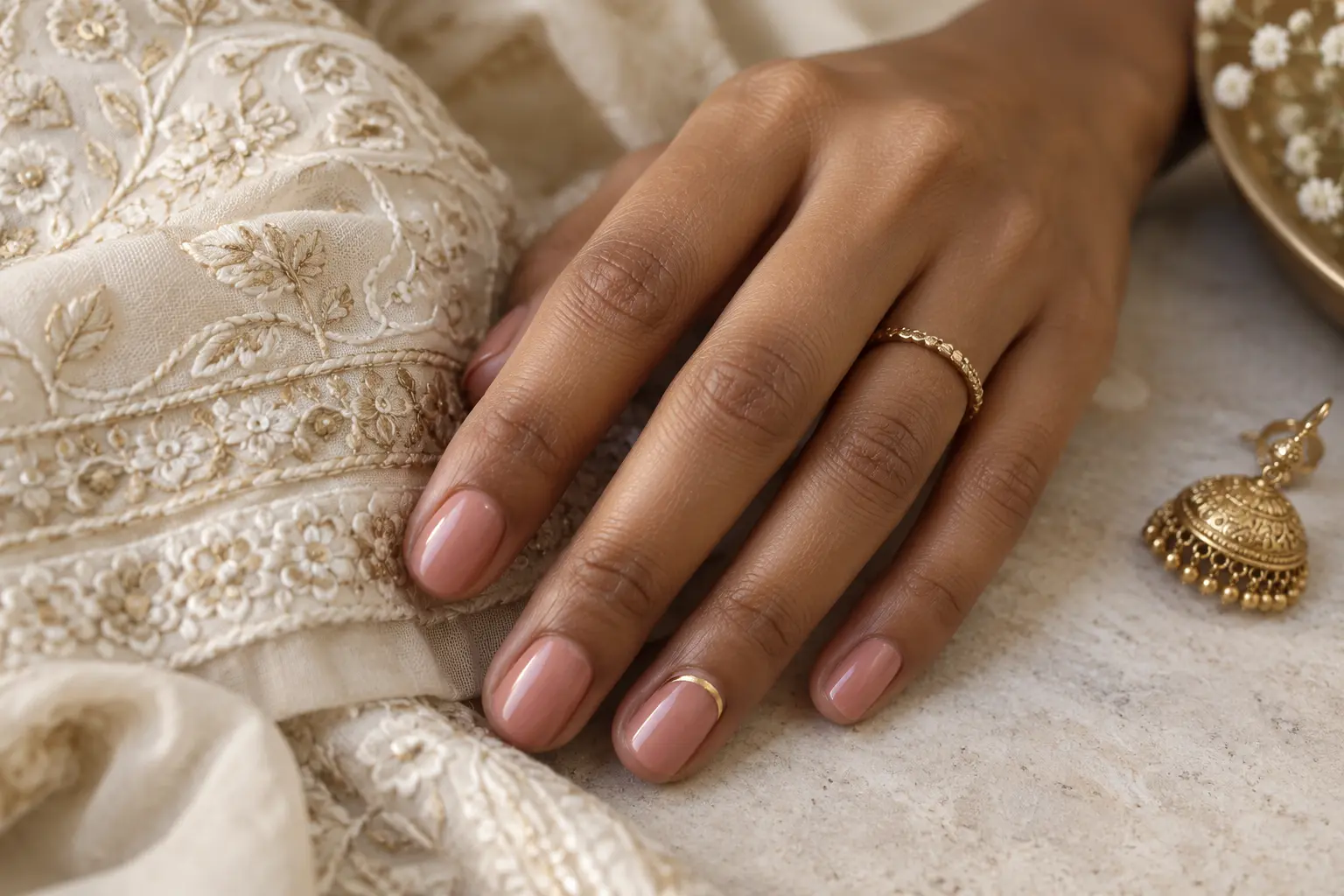
A soft neutral with one jewellery-inspired detail
Use a small line from the jewellery rather than an entire embroidered pattern.
A neutral base does not have to match the skin exactly. Choose whether you prefer sheer colour, a softly opaque surface or visible contrast. Then borrow a simple element from your jewellery: a curved line, a small dot cluster or a fine edge.
Avoid asking a tiny nail to reproduce an entire embroidered pattern. Identify its recognisable feature instead. A curve and one dot may communicate the reference better than a crowded miniature drawing.
If a design uses a religious or culturally significant symbol, understand its meaning and appropriateness before requesting it. There is no need to use symbols at all; colour, line and finish can create an occasion manicure without treating sacred imagery as decoration.
Work with short nails before considering added length
Choose your comfortable length first. If you like a detailed long reference, ask which elements can be removed while preserving its character. A small corner accent, narrow tip or single painted feature may translate more clearly than shrinking every line.
Our short nail shape guide separates round, squoval, square and oval outlines. Use it to clarify the shape without assuming that an elaborate outfit requires long extensions.
Also decide whether you want a flat finish. Raised embellishment can be an intentional styling choice, but it may not suit how you handle fabric or accessories. Tell your nail professional if smoothness matters more than dimensional decoration.
Plan around the whole celebration
Think about dressing, helping with preparations, travelling and changing jewellery. Choose a manicure you are comfortable using through those tasks. A shorter length or flatter finish can be a personal preference; it is not a guarantee that a manicure will survive every activity.
Book application and removal or maintenance as part of the same plan. If you are using regular polish at home, follow the product’s drying directions instead of painting immediately before fastening clothes. If you choose gel, discuss the correct removal route. The AAD’s gel-manicure guidance is useful background for that decision.
Three more colour combinations to take to the salon
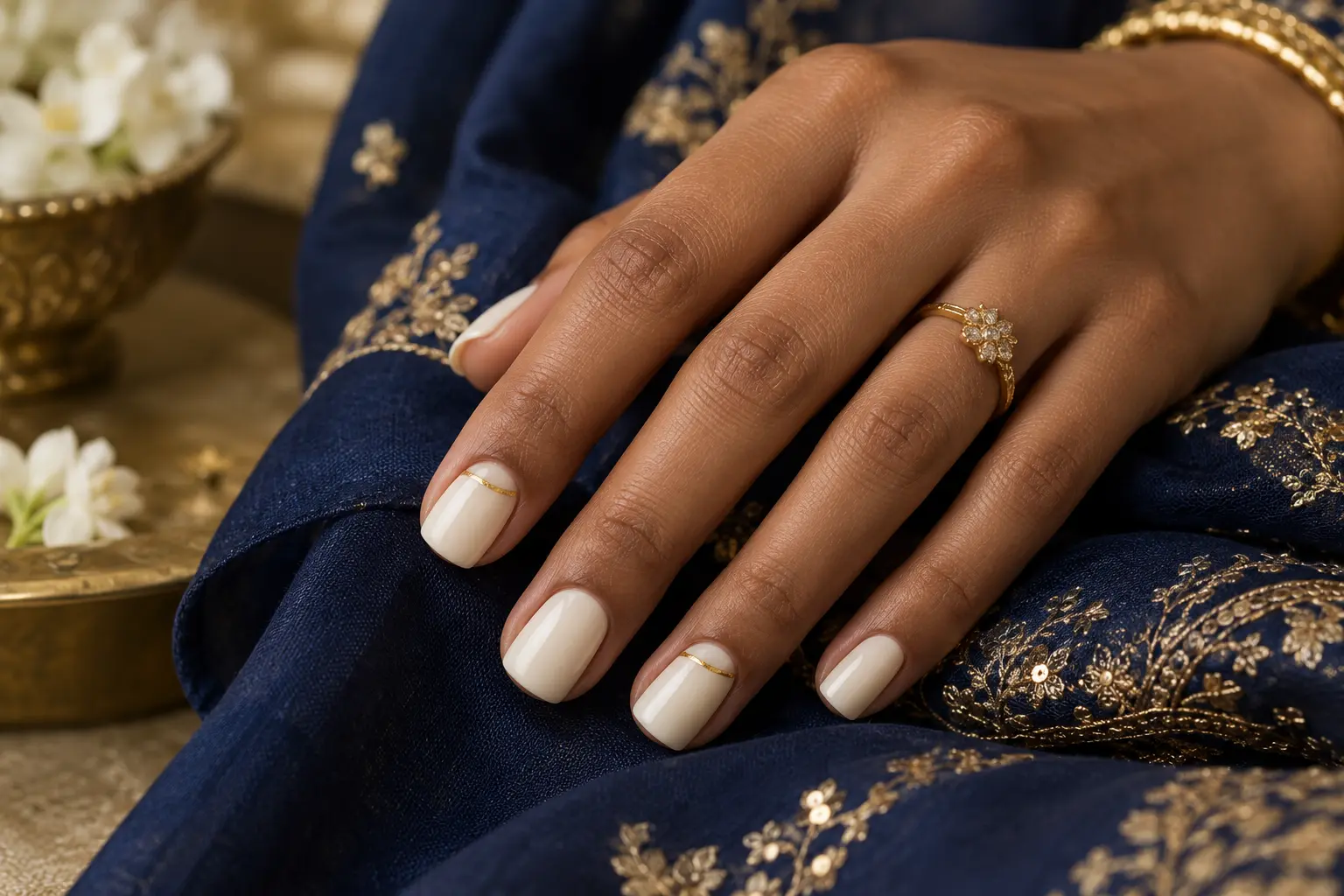
Ivory with a fine gold curve
Ivory and one fine gold accent can balance a richly detailed outfit.
Use a softly opaque ivory base and a single flat gold curve on one or two nails. Keep the other nails plain. This works as a reference when you want gold jewellery to be the link without repeating a richly patterned garment. Ask whether the accent is painted or reflective before choosing the application system.
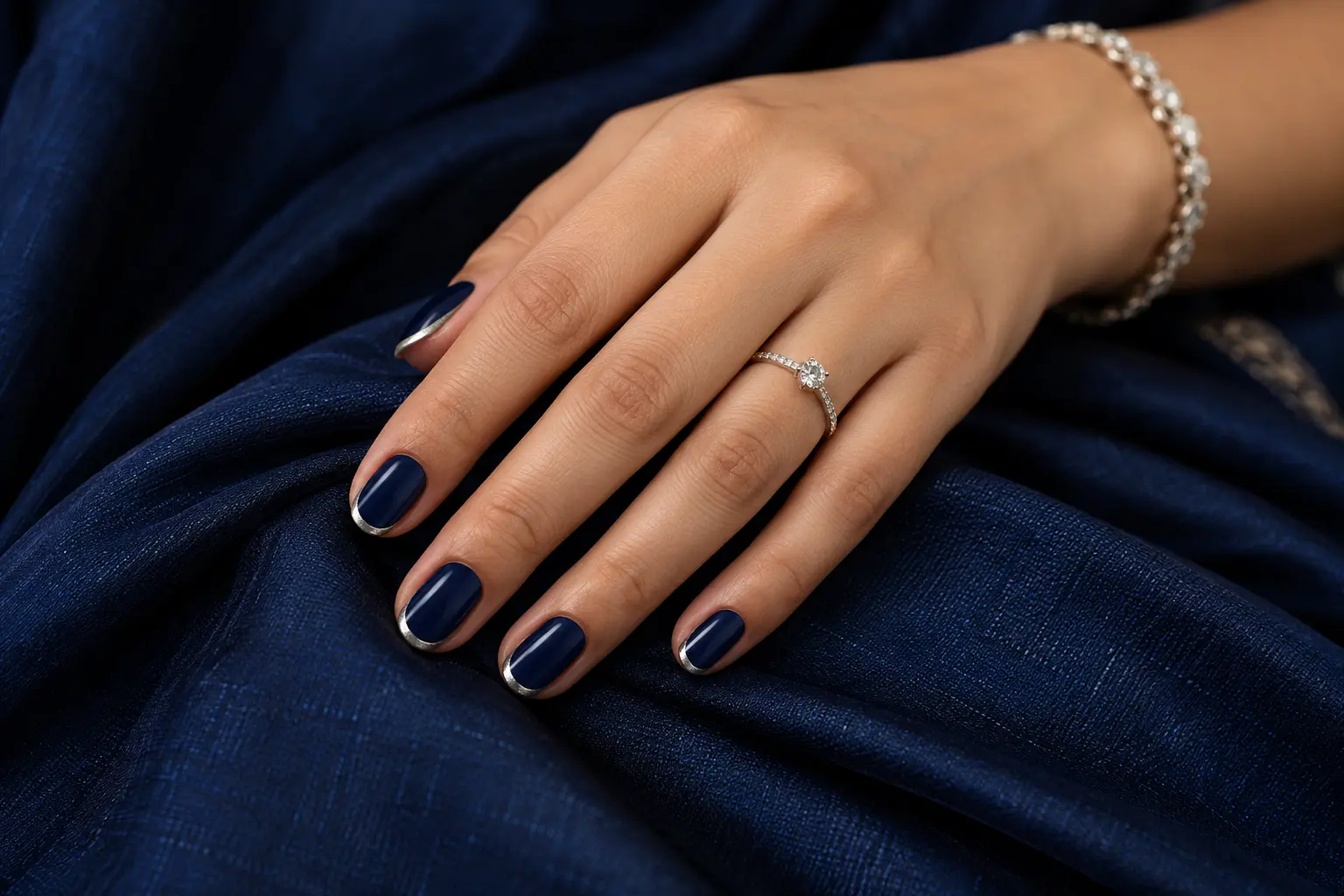
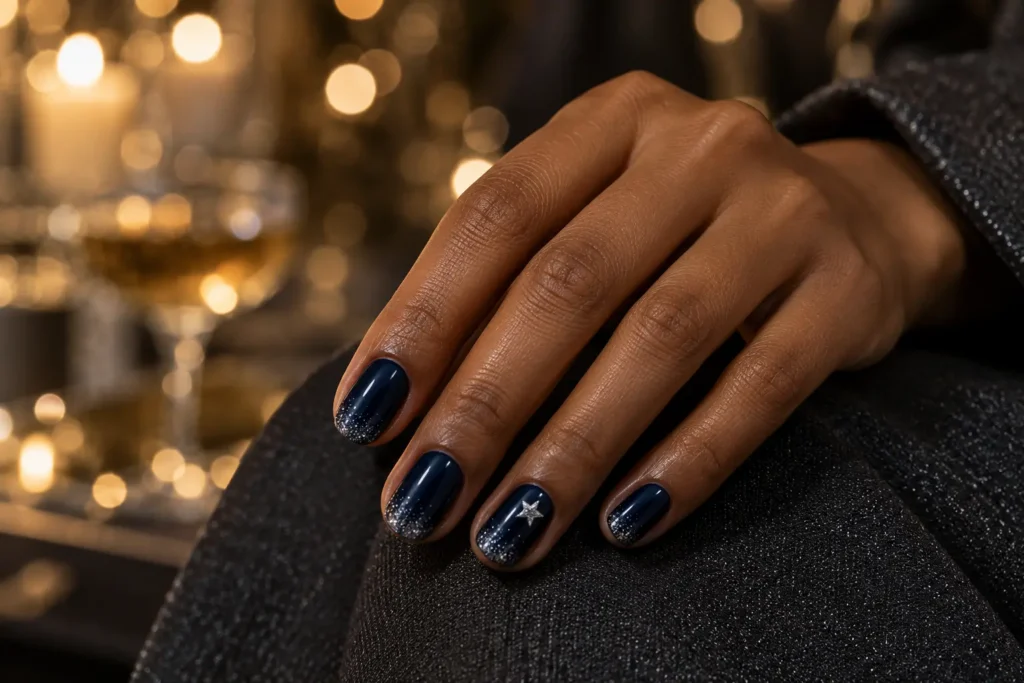
Indigo with one silver edge
Keep the silver edge shallow so the indigo remains the main colour.
Compare a deep blue-leaning shade beside your fabric, then add a narrow silver edge only if you want that contrast. A plain indigo set is the simpler alternative. Keep the tip shallow on short nails so it does not replace the main colour with a wide metallic band.
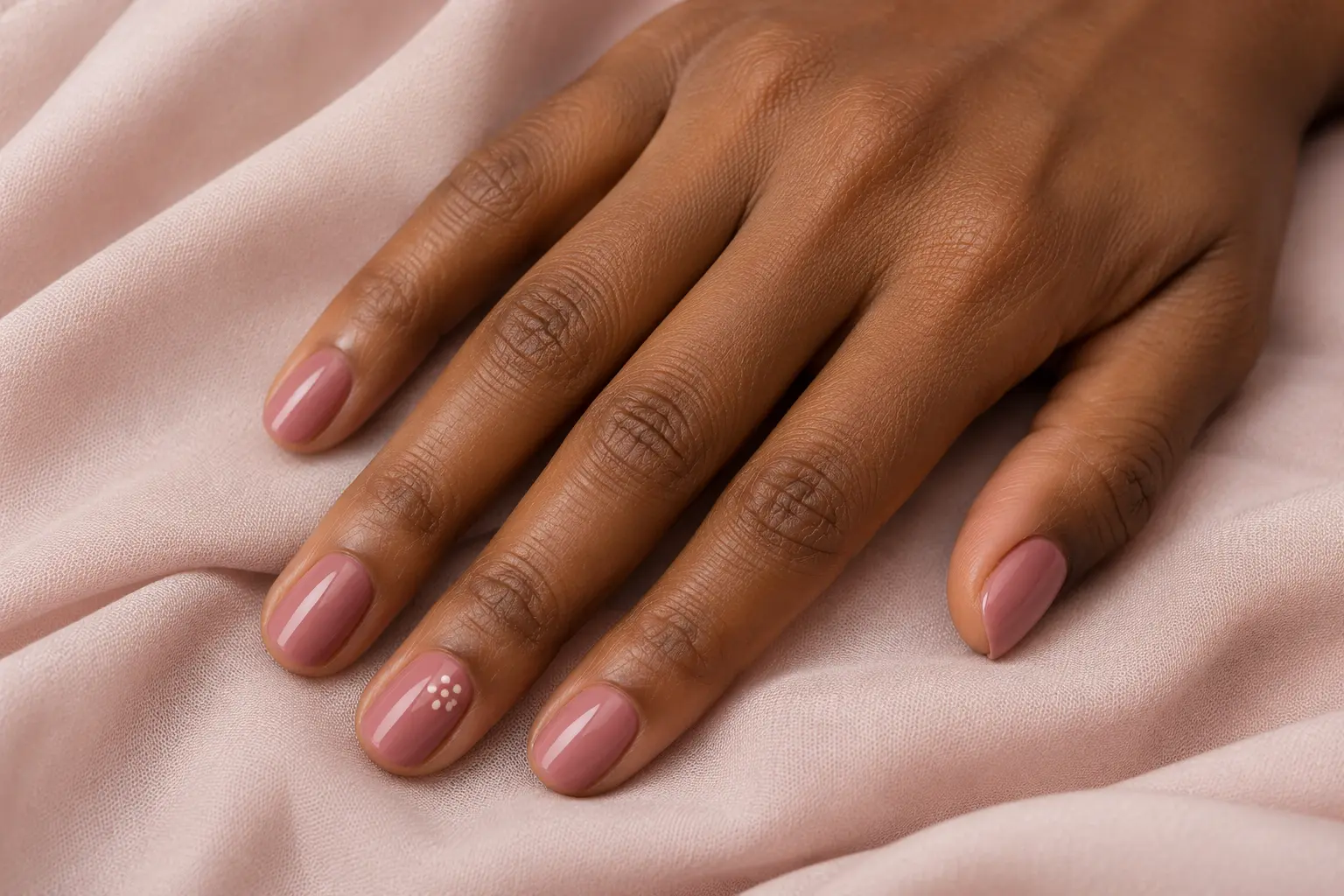
Rose with small pearl-coloured dots
Painted dots give a smooth alternative to attached pearls.
Choose a muted rose base with a tiny painted cream dot cluster on a ring nail. Painted dots give a different surface from attached pearls. Say which you mean, especially if you want a smooth finish that will not catch on delicate fabric. Do not assume a bright reference photograph shows the height of the decoration.
Choose the version you still like without the accent
Put two options beside your outfit: the chosen solid colour and the same colour with the proposed detail. If the plain version already feels busy against embroidery, remove the extra artwork. If it feels too quiet for your taste, add one deliberate accent location rather than changing every nail. This gives your nail professional a clear fallback and avoids a design that depends on fitting too many small motifs onto a short surface.
Take a brief rather than a collection of conflicting pictures
Write: “My outfit is __. The manicure should echo __. I want __ length and __ shape, with __ finish. Keep the detail on __ nails, and avoid __.” Add one clear reference for colour and a second only if it explains the artwork.
For example: “Deep emerald, current short squoval length, a glossy finish and one fine gold curve on each ring finger, with no raised decoration.” This is a design suggestion, not a report of a tested client set.
Before the appointment ends, check the colour and detail in normal light and ask how to care for and remove the chosen system. The useful result is a manicure that belongs with your outfit and your plans, without requiring every part of the celebration to appear on ten small nails.
A little context, from the team
Zaki is a professional hairstylist and Rafaa is a professional nail stylist. Explore our guides for styling ideas, practical steps and details to help you choose your next look.
Choose Thanksgiving nails by colour, finish and your actual plans. Compare quiet neutrals, warm shades and small details for the November 2026 holiday.
Learn a controlled regular-polish routine, practise on one hand and troubleshoot flooding, streaks and smudges without relying on universal drying times.