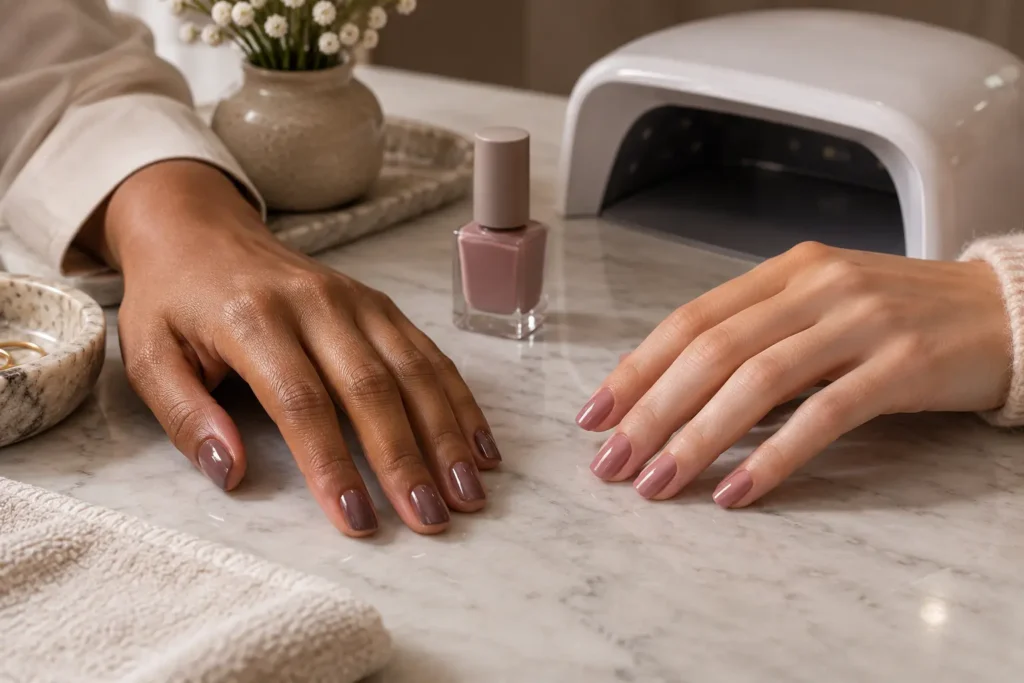
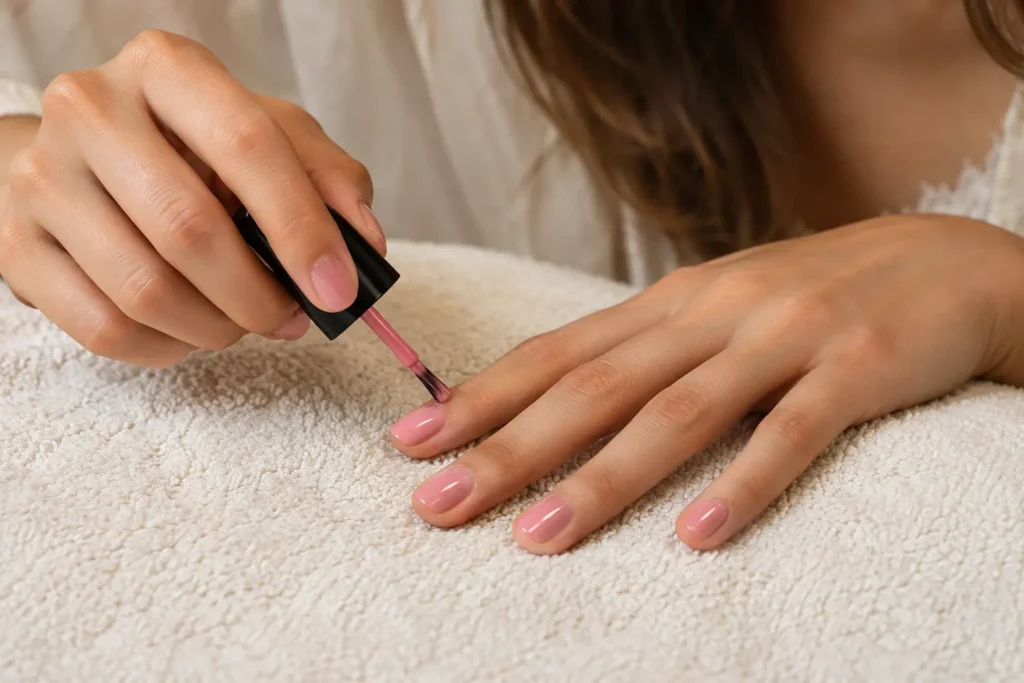
Choose a manicure by the days you want it to cover and the way you want to remove it. Regular polish can suit frequent colour changes and small home touch-ups. Gel polish involves a product-specific curing system and a different removal commitment. Neither label guarantees the same wear on every person.
The useful comparison is not “which is best?” It is “which system fits the next few weeks, including the day I want it off?” A beautiful finish is only one part of that decision.
First, identify what the bottle or salon menu means
Read the product directions: a gel-like shine does not identify a lamp-cured system.
Regular nail lacquer dries without a curing lamp. Gel polish is used with the lamp and application process specified for that system. A product marketed as “gel-like” may be an air-drying lacquer rather than a lamp-cured gel. Read the instructions instead of inferring the system from the shine or the word on the front.
For a concrete comparison, OPI’s professional gel application guide specifies its own layers and matching lamp. Those details belong to that system; its curing time should not be transferred to a different brand or lamp.
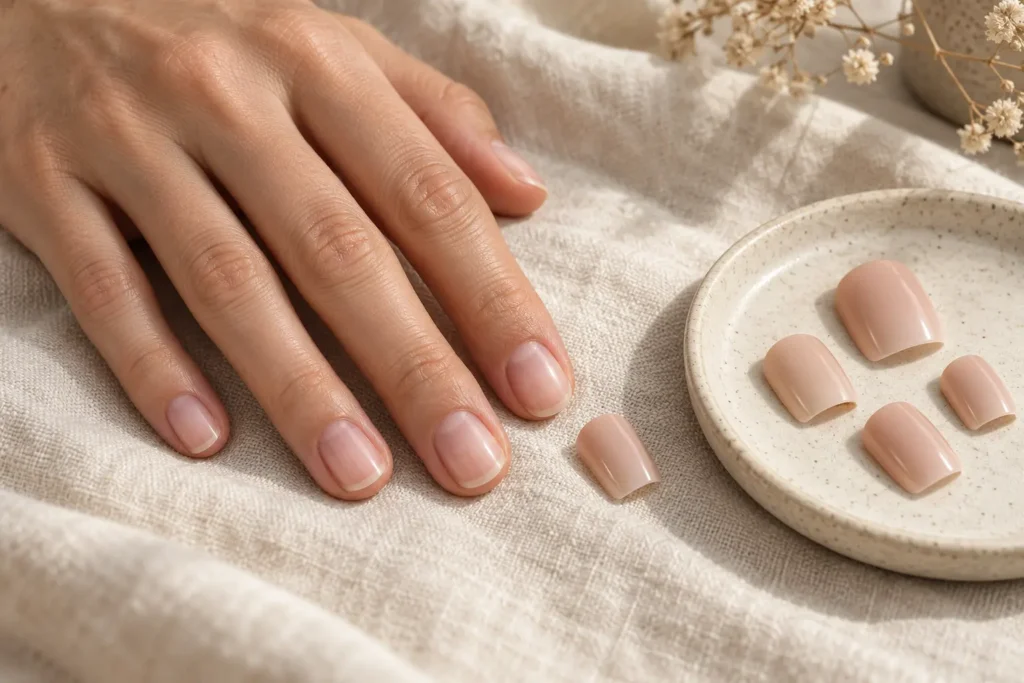
An appointment described as “gel nails” might also mean gel polish on natural nails, a structured overlay or extensions. Ask what will be applied. If you only want colour on your existing length, make that clear before the appointment rather than discovering a more involved service halfway through.
Put the trade-offs beside your diary
Put application, colour changes and removal into the same plan.
Your priority
Regular polish
Gel polish
Change colour for separate occasions
Usually the simpler route to repeated colour changes
Each change involves the relevant removal and application process
Avoid a curing lamp
Choose a labelled air-drying system
A compatible lamp is part of the system
Repair a small colour chip yourself
A modest touch-up may be practical
Ask the professional about repairs; do not improvise a mixed-system fix
Keep one finish through a busy period
Consider drying time and your own wear history
Consider both application and a realistic removal appointment
Remove it when you decide
Check your polish/remover instructions
Plan the correct product-specific removal method in advance
This is a planning comparison, not a measured wear test. Work, water exposure, nail condition, application and products all affect the experience. A salon’s advertised duration does not mean a lifting or uncomfortable set should remain on until the advertised date.
Work through three ordinary decisions
Two events, two different colours
Suppose you want deep green for a dinner on Friday and a pale neutral for an interview the following week. If changing colour matters more than keeping the same finish, regular polish deserves consideration. Leave time for removing and repainting, not just choosing the shades.
You could also choose one colour you genuinely want for both events. The point is to decide that now. Paying for a finish you intend to remove almost immediately may solve a problem you do not have.
One event in the middle of a busy fortnight
You want one manicure for a celebration and have little time around it. Ask the salon about the entire service: the system, the expected maintenance, what to do if it lifts and how removal will be handled. Put the removal plan in the diary alongside the application.
If you cannot return, ask whether the proposed system has an appropriate home-removal route and whether you are comfortable following it. “I will figure it out later” is not part of the manicure service.
A new finish you have only seen online
A magnetic cat-eye reference, reflective chrome and ordinary metallic lacquer can look similar in a short video. They are not interchangeable instructions. Show the effect you mean, and ask what system is needed to create it on your natural nails.
Our dark red cat-eye guide explains the visual choices. Use it as a design conversation, not proof that a particular bottle or lamp can produce the same effect.
Judge the whole cost, not the bottle price
A useful personal comparison includes the base and top products, application tools, remover, time and any professional appointments. For gel, that also includes the appropriate curing setup if you are considering home use. Avoid a precise “cost per wear” calculation unless you have your own actual spending and wear records.
Make a small worksheet: what must I buy, what do I already own, who applies it, who removes it, and when? A low bottle price can be misleading if it starts a system you do not otherwise use. Equally, an appointment may be worth paying for because you want the professional service, not because a theoretical daily calculation declares it cheapest.
Take removal and nail changes seriously
The American Academy of Dermatology’s gel-manicure guidance advises against picking gel polish and discusses protecting hands from curing-light exposure. Read that guidance and the product instructions before choosing the service.
A manicure comparison cannot determine the cause of soreness, a rash or changes in your nails. Seek qualified advice for persistent problems. Do not interpret an earlier comfortable manicure as proof that every subsequent product is suitable for you.
Ask what happens if the finish chips or lifts early. A clear repair policy is useful; a promise that nothing can go wrong is not. Do not seal a lifting area with whatever glue or polish happens to be at home without product-specific advice.
Make the choice with three questions
Start with the decision that is hardest to change later: removal. If you do not want a lamp-cured product or cannot arrange its appropriate removal, compare regular lacquer first. If you are interested in gel, ask the salon to name the actual service and explain the removal before deciding on the colour.
Next ask whether you want to change the colour during the period. A neutral you enjoy for every occasion may remove that conflict. Choosing a single finish reluctantly, then planning to cover or pick it off a few days later, does not solve it.
Finally, decide who will handle a problem. A regular-polish chip may be a local repaint you are comfortable doing. An unfamiliar lifting enhancement needs a product-specific response. Choose the service whose maintenance you can actually manage.
Write down
Regular-polish option
Gel-service option
Application items or appointment
List what you really need
Ask what the quoted service includes
Colour changes planned
Record the dates
Ask about each removal/reapplication
If a nail chips or lifts
Your known repair method
The salon’s repair advice and availability
Removal
Product and time you can allow
Method, appointment or appropriate home route
Do not fill this worksheet with somebody else’s advertised wear times. Use it to expose missing information before paying. You may decide that regular polish fits one month and a professional gel service fits another. There is no need to make one permanent choice for every manicure.
Choose the outline independently
Outline, colour and application system are separate decisions.
You can prefer a short round nail with either a simple colour or a specialist finish. Length is not a reward for choosing gel, and a regular manicure does not have to be plain. Separate the nail’s outline, colour, artwork and application system so you can change one decision without replacing the whole brief.
Our short nail shape comparison helps you describe the outline. Bring a reference at a similar length when possible, particularly if you want fine tips or a small motif.
Finish with a brief you can actually use: “Colour on my current short length, no added extensions, a finish suitable for these two events, and a removal method I can plan now.” Then choose regular or gel with the whole process visible, including the part after the photographs.
A little context, from the team
Zaki is a professional hairstylist and Rafaa is a professional nail stylist. Explore our guides for styling ideas, practical steps and details to help you choose your next look.
Learn a controlled regular-polish routine, practise on one hand and troubleshoot flooding, streaks and smudges without relying on universal drying times.
Identify tabs, nail glue or another enhancement before removal. Follow the product instructions and use clear stop points instead of pulling off a stuck…