Diwali Hairstyles: Plan the Fastening Around Earrings and Your Outfit
Choose Diwali hair around earrings, neckline and dressing order. Use a fastening rehearsal to check comfort, visible detail and accessories before the event.
Choose your Diwali hairstyle with the outfit and earrings beside you, not after the hair is finished. A low bun can meet a raised neckline; loose side sections can catch around large earrings; an ornament can feel heavier after you have worn it for a while. These are placement questions you can rehearse before the celebration.
Diwali is listed for 8 November 2026 by Drik Panchang. Confirm the dates of your own gatherings and local observances. This guide offers optional occasion styling, without presenting any hairstyle as required or representative of every family or community.
Rehearse the three things that touch the hairstyle
Set out the neckline, earrings and any covering or hair ornament you intend to wear. Check them in the order you will put them on. A style should remain comfortable when you turn, look down, sit and adjust your clothing.
What will touch the hair?
What to test
A useful change
A high or decorated neckline
Whether a low fastening rests against it
Move the bun or ponytail slightly, or choose less gathered bulk
Large earrings
Whether loose sections repeatedly catch
Pin a small side section away from the earring
A covering worn for part of the event
The pressure and position underneath
Choose a lower-profile base that suits how you wear it
A hair ornament
Its weight, attachment and removal
Support it separately rather than expecting a small decorative pin to hold everything
Do not pull hair tighter merely to create clearance. Change the placement or simplify the shape. The AAD’s tight-hairstyle guidance advises changing styles that pull or hurt.
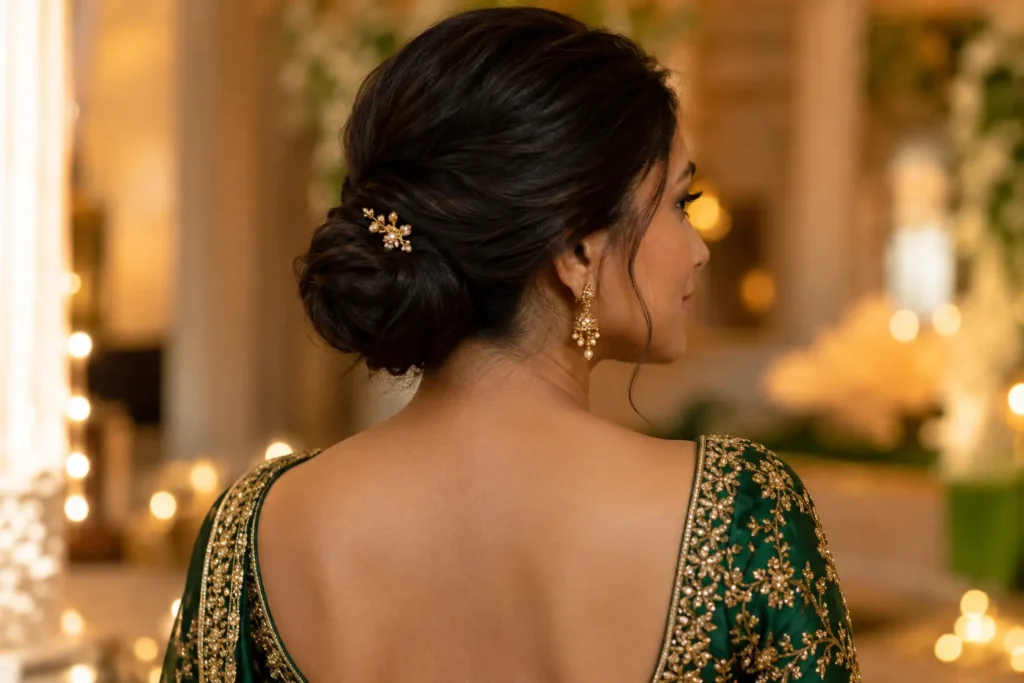
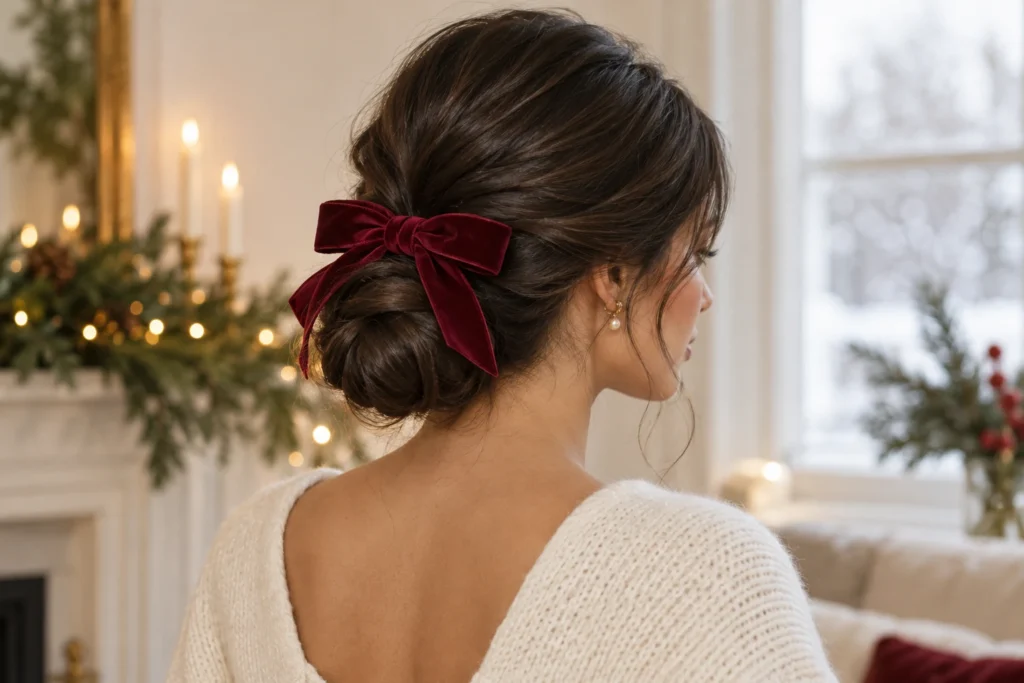
A low bun when the neckline leaves room
Make a comfortable ponytail where the bun can sit without meeting the collar. Wrap or arrange the length into a compact shape using a technique you already know. Secure the bun before adding any decorative element.
Check the back in a second mirror if possible. You are looking for the actual outline and fastening, not perfect symmetry at every angle. A small amount of looseness can be intentional, while a base that moves as soon as you release it needs adjustment.
Use our bobby pin and hairpin comparison to distinguish catching a stray end from supporting the body of the bun. A more elaborate ornament should not be used to compensate for a bun that cannot hold on its own.
Now try the earrings and neckline. If the bun meets the fabric, move the base while you still have time to reset it. Photograph the successful placement so you do not have to rediscover it on the day.
A side-pinned style when you want your hair loose
Move a small side section rather than pulling all the hair back.
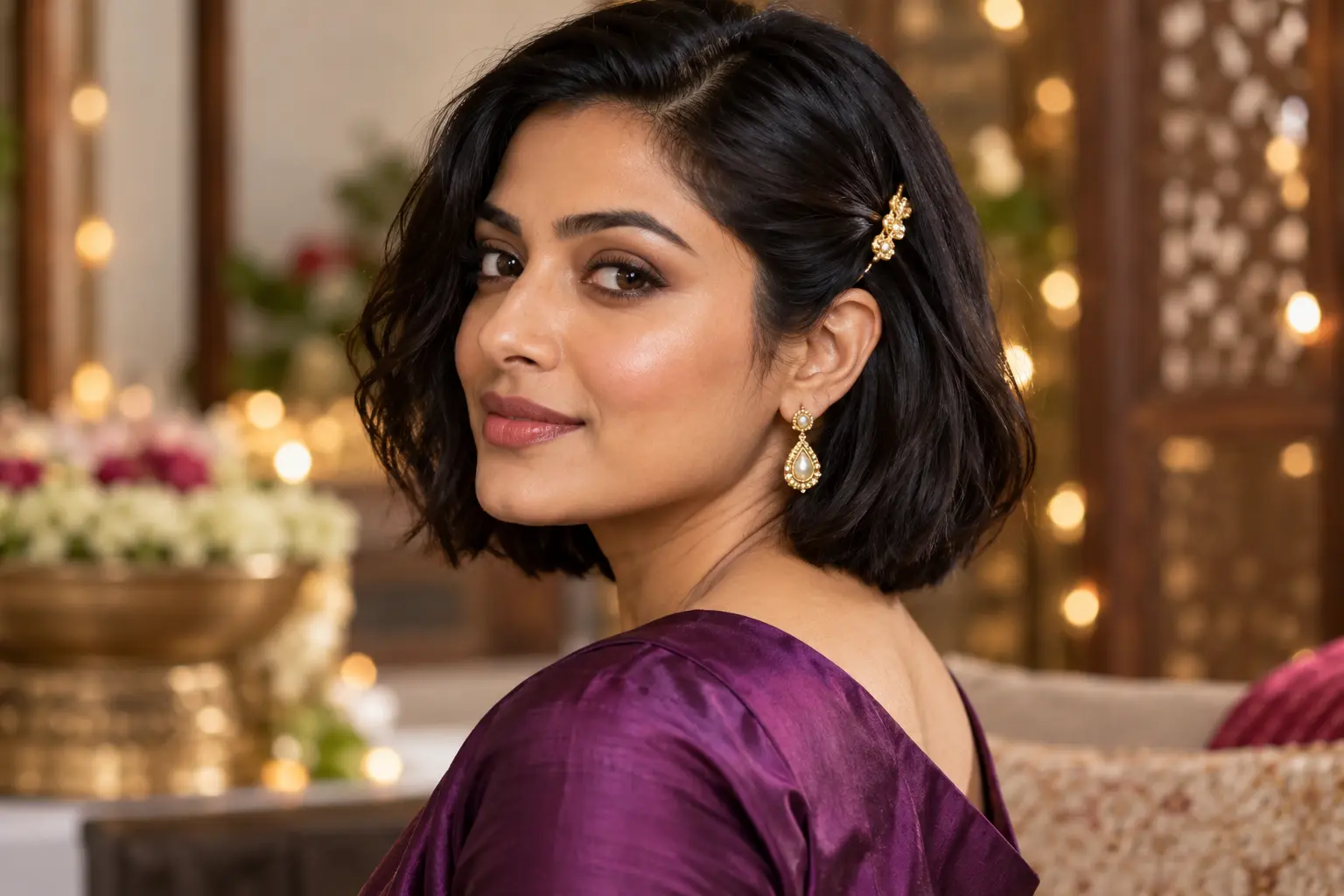
Keep the main texture as you prefer it and gather a small section beside one ear. Direct it to a comfortable anchor point and secure it without stretching the hairline. Check that the pin or clip catches the section rather than only resting on top.
Put on the earring before choosing exactly where the loose front piece should end. A strand that crosses a large earring can be moved behind it, shortened visually with a gentle curve or included in the pinned section. There is no requirement to clear both sides if you like an asymmetric arrangement.
This approach can work with a short bob or a longer style when full gathering is not practical. Judge it by whether the side section reaches, rather than by a named minimum hair length. Leave a short layer visible if hiding it requires uncomfortable tension.
A braid-based ponytail for a familiar gathered shape
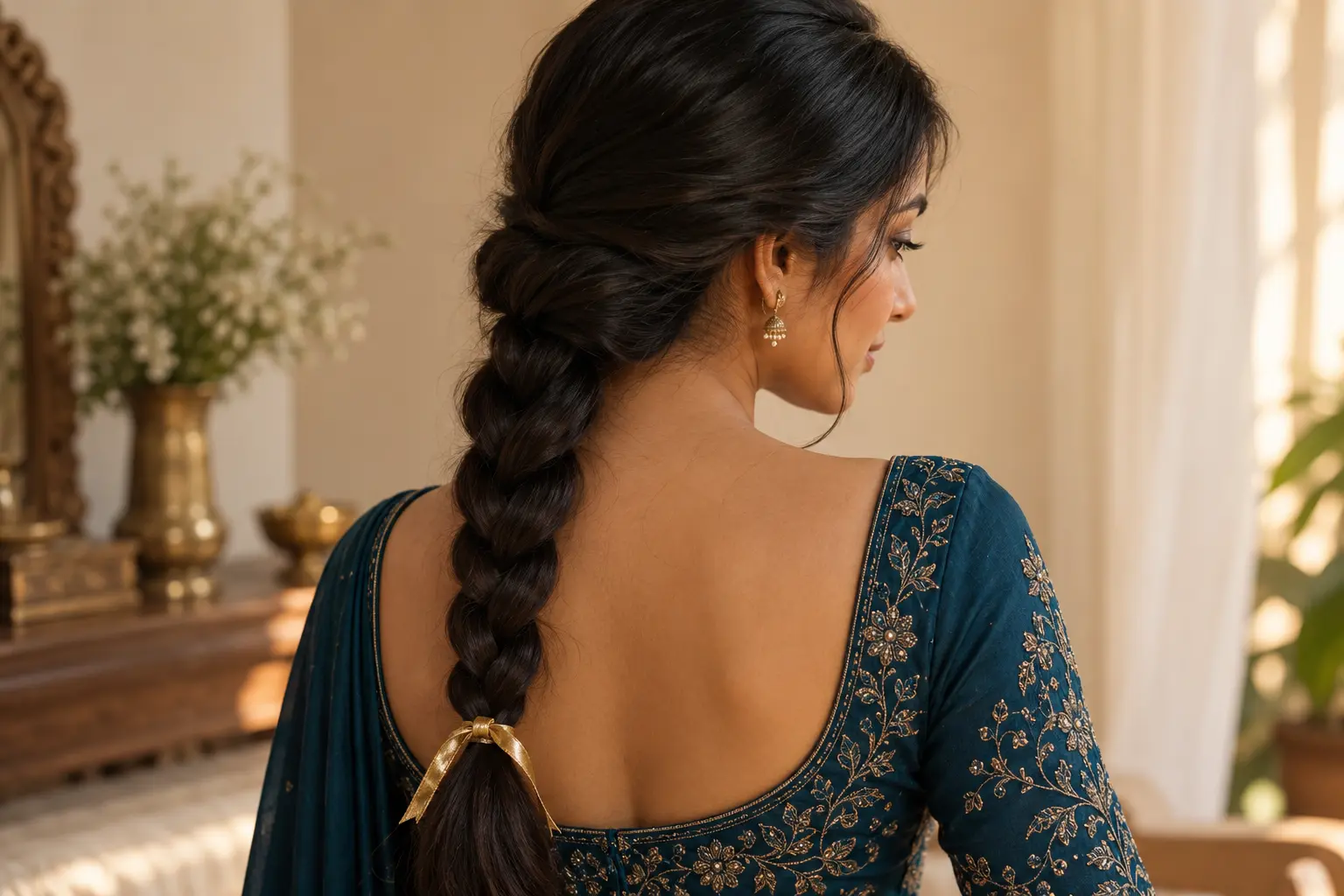
Secure the ponytail and braid before adding a ribbon or ornament.
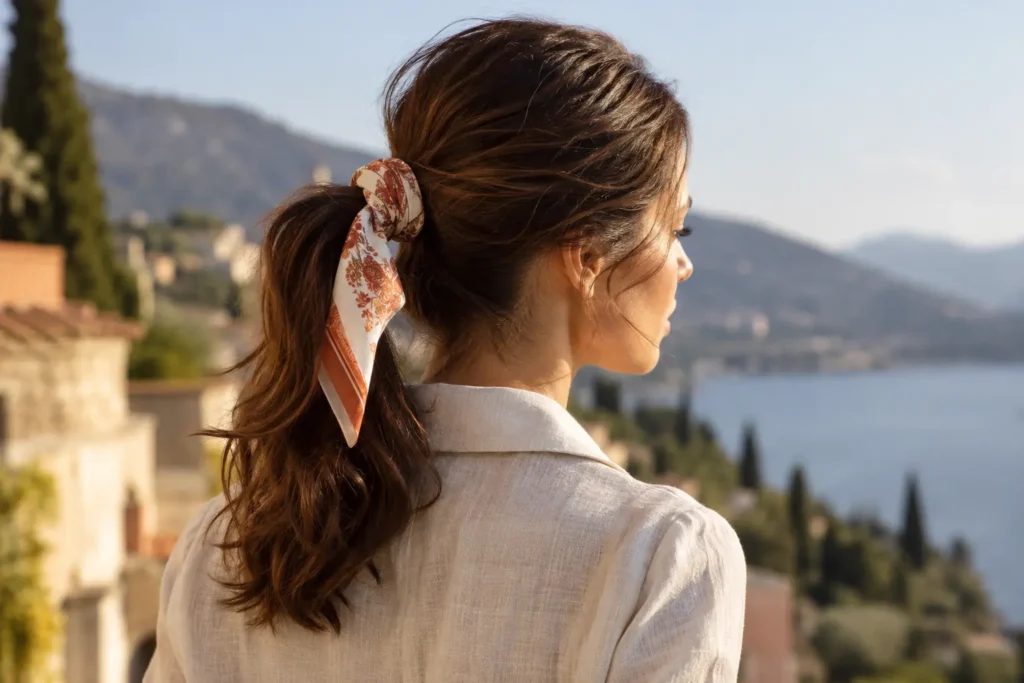
If you already braid comfortably, make a ponytail and braid the length using your preferred simple technique. Keep the base and the braid’s end secure before adding a ribbon or ornament. Decoration should not carry the weight of the whole arrangement.
Compare the braid against the outfit. A very long decorative tail may compete with a detailed back or catch where you sit. Adjust the arrangement around that practical issue instead of adding more fastenings at the scalp.
If braiding is unfamiliar, a plain ponytail is a sensible alternative. Our everyday hairstyle guide provides basic shapes you can dress up. Learning a new technique during a busy dressing routine adds a problem that an accessory alone may not solve.
Natural curls with deliberate accessory placement
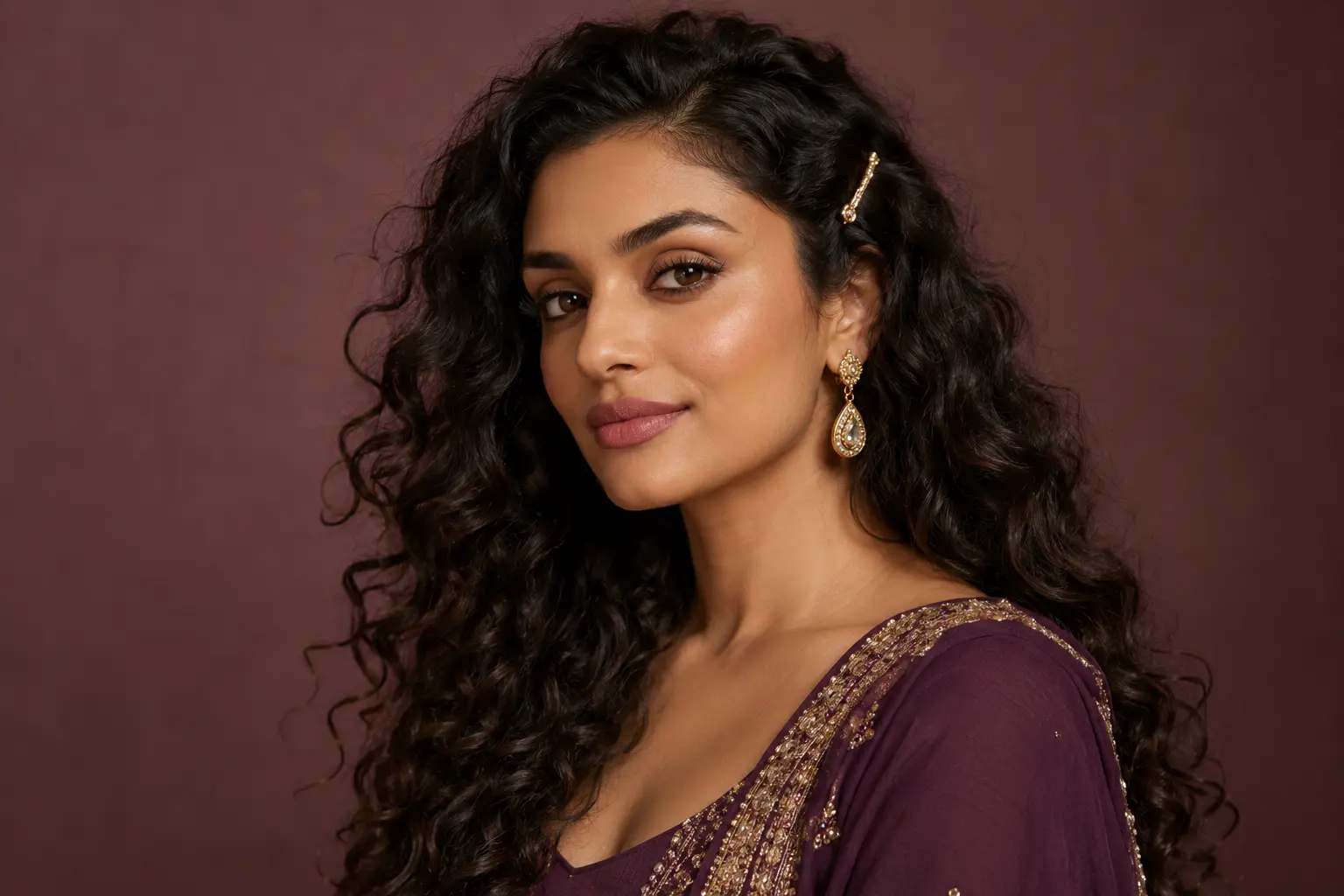
A small side section can clear the earring while leaving the main texture loose.
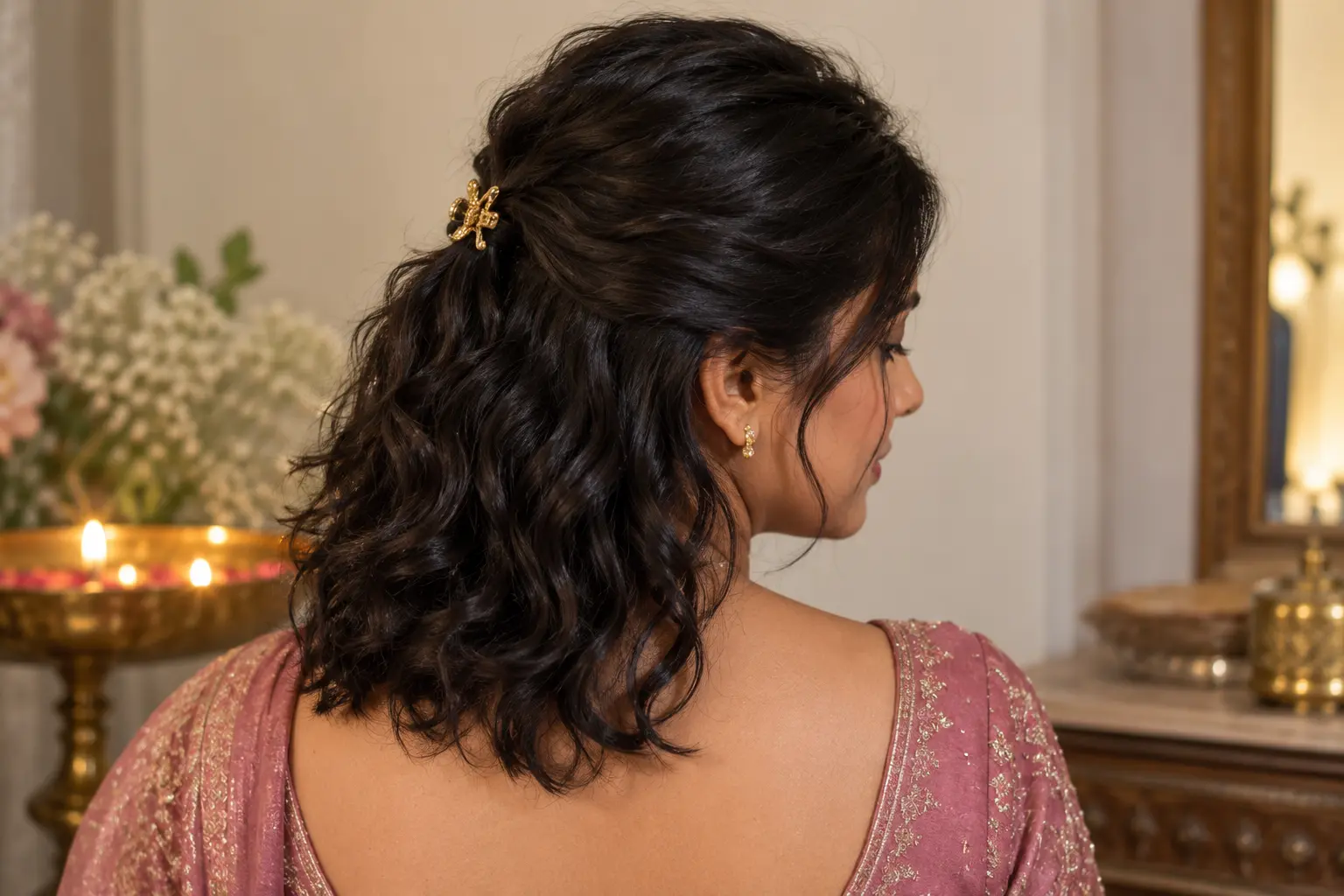
Arrange your curls as you normally prefer, then choose the specific area where you want decoration. A side clip, a comfortable band or a small gathered section can add a focal point without changing the entire texture.
Check how the accessory opens and closes before placing it. Avoid sliding a rough hinge or exposed edge through the curls. When removing it, open or release the fastening and free caught strands rather than dragging it out.
If an accessory compresses the front more than you want, move it or choose a lighter arrangement. “Secure” and “flattened” are not the same styling objective. Describe which shape you want to preserve when you ask a stylist for help.
Decide the dressing order before the day
Lay out a short sequence: clothes that must pass over the head, base hairstyle, earrings, ornament, final check. Your outfit may require a different order; rehearse it rather than treating this as a rule.
Check any cords, hooks or fasteners that pass near the hairstyle. Keep products and tools away from clothing that could be marked by them, and follow labels. Around lamps, candles or cooking, keep loose hair and fabric away from flames and hot surfaces. A decorative photograph should not determine how close you stand to a flame.
Carry the small tools that support your chosen base, not an entire styling collection. A spare matching elastic and a few suitable pins may help repair a familiar fastening. They do not replace an ornament’s own secure attachment instructions.
Build a simple occasion bun before adding the ornament
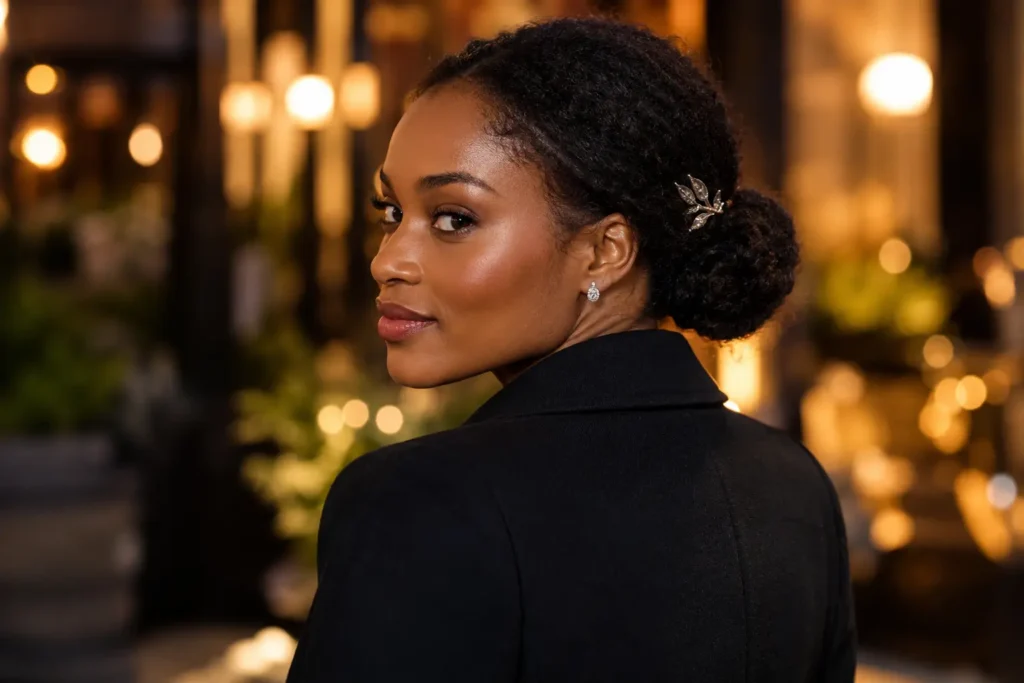
Choose a position clear of the collar and gather a familiar ponytail. Keep the hairline comfortable; moving the base is more useful than making it tighter. If your length cannot wrap into a compact coil, use a smaller gathered section or keep the hair loose with a side accent.
Hold the ponytail base steady and wrap the length in the direction that feels manageable. Support the shape with your other hand.
Secure the coil with fastenings suitable for the shape. Release your hand gradually and check whether the coil or the whole base moves.
Adjust the part that moved before adding decoration. If the base shifts, an ornament on the outside will not solve it.
Try the neckline and earrings. Once they clear the bun comfortably, add the ornament according to its own fastening method.
A half-up alternative for layers that will not join
A smaller gathering can work when the front layers will not join a full bun.
Gather two modest side sections towards a point they can reach without stretching. Secure them together, leaving the rest of the length loose. Keep shorter front pieces visible if they do not join comfortably; the half-up does not need to include every strand.
Place a small ornament at the secured gathering only after it holds. Check whether its weight changes the position, then turn and look down. A less elaborate accessory is a valid choice when the first one overwhelms the base. With curls, preserve the volume you want and judge the side sections in their resting shape, rather than pulling them straight to make them reach.
Use a reference that explains the job
For a salon appointment, show the hair reference alongside the actual neckline and earrings. Say what you want visible: the earring, the back detail, your natural texture or the ornament. Ask whether your current length and layers can produce the proposed shape.
A useful brief could be: “Keep my curls loose, clear this earring with a small side section, and use one lightweight clip I can remove myself.” Another might be: “A compact bun that sits above this collar, with the ornament added after the bun holds.”
The result to aim for is a hairstyle you can wear through your own celebration comfortably, with every decorative piece doing a clear job.
A little context, from the team
Zaki is a professional hairstylist and Rafaa is a professional nail stylist. Explore our guides for styling ideas, practical steps and details to help you choose your next look.