Green Christmas Nails: Choose Forest, Emerald or Sage Before the Artwork
Compare forest, emerald and sage Christmas nails before choosing the artwork. Use finish, lighting and detail placement to build a balanced festive set.
Forest green gives Christmas nails a rich, dark base; emerald brings stronger colour; sage offers a softer, muted finish. Start with the shade you would enjoy wearing plain, then add a champagne edge, cream star or single plaid accent if you want more detail.
Find your green
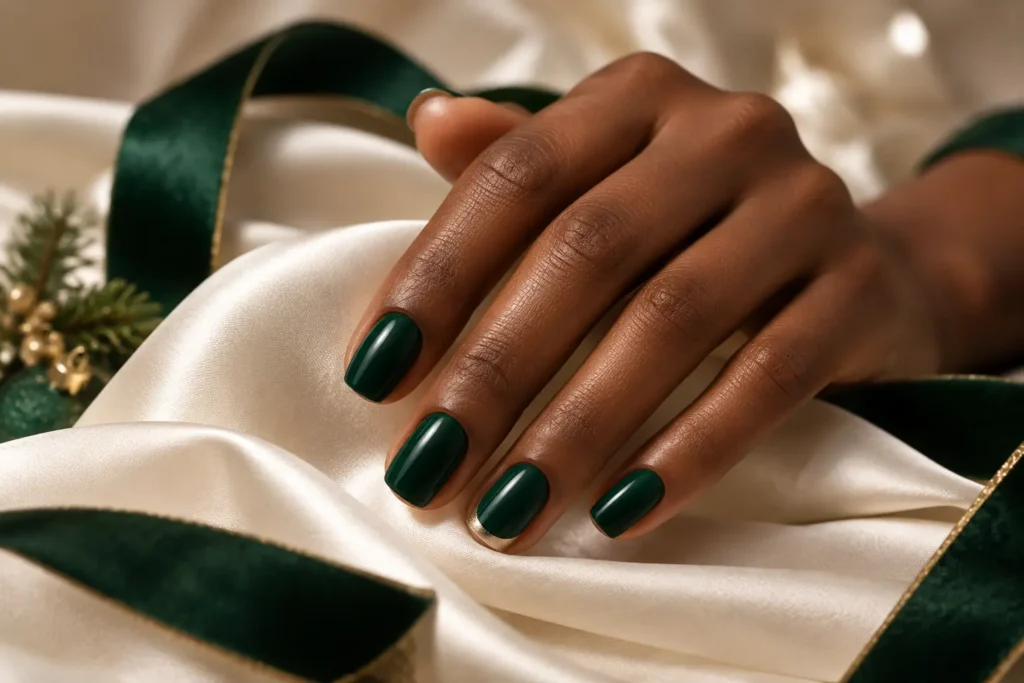
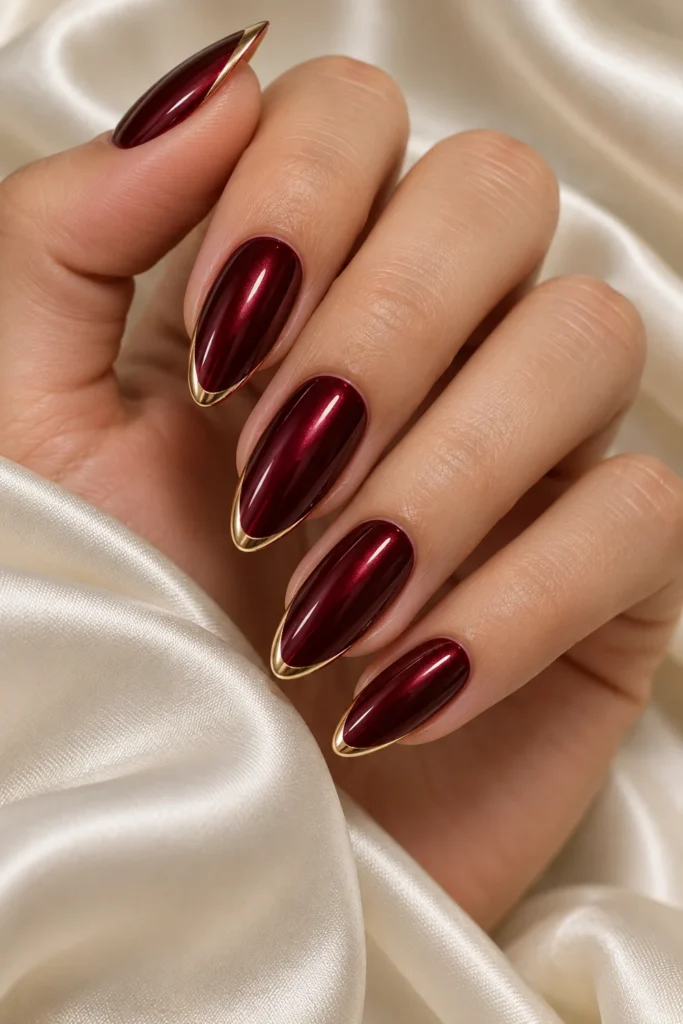
Deep and glossy: forest green with a fine champagne edge.
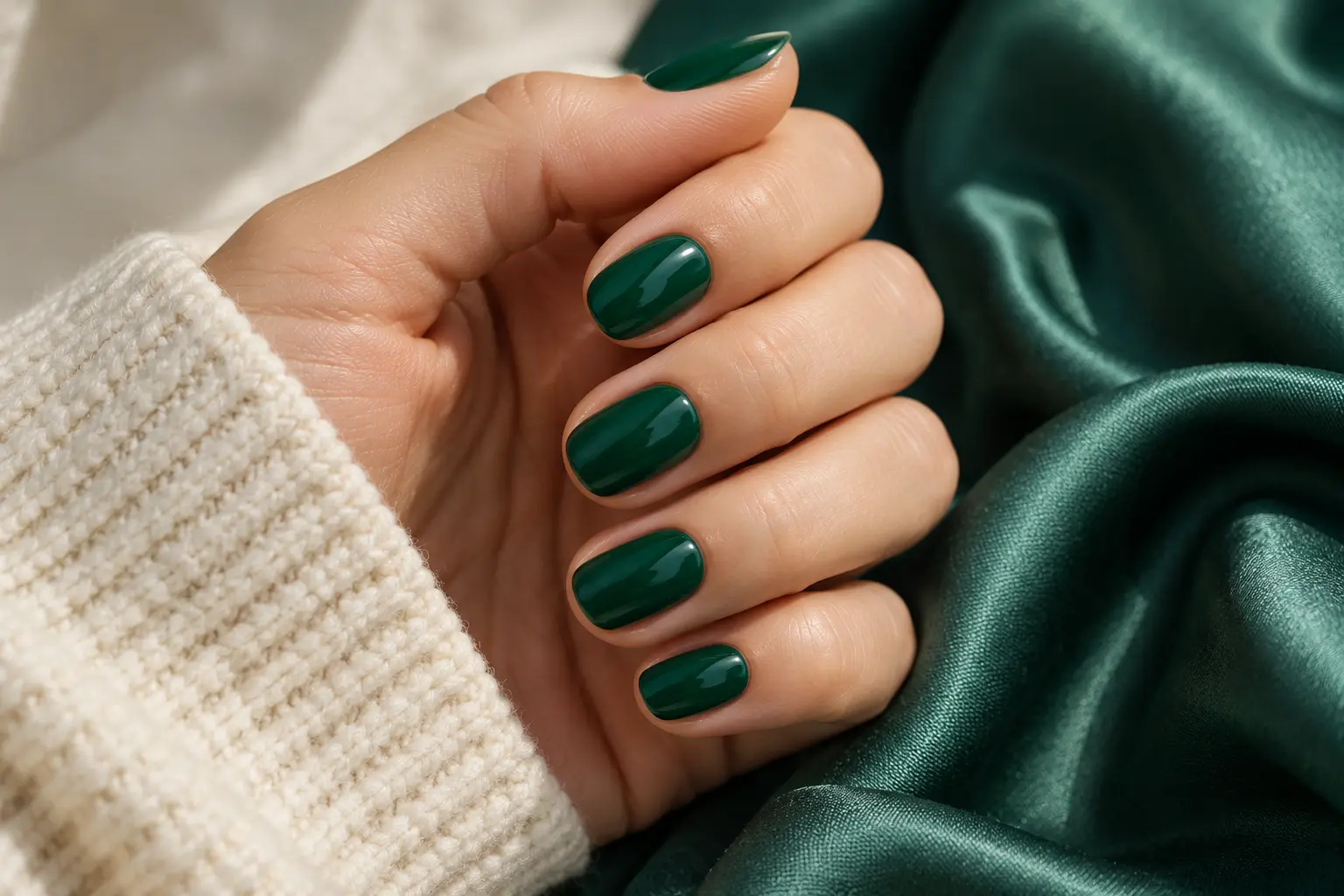
Bold colour: plain emerald.
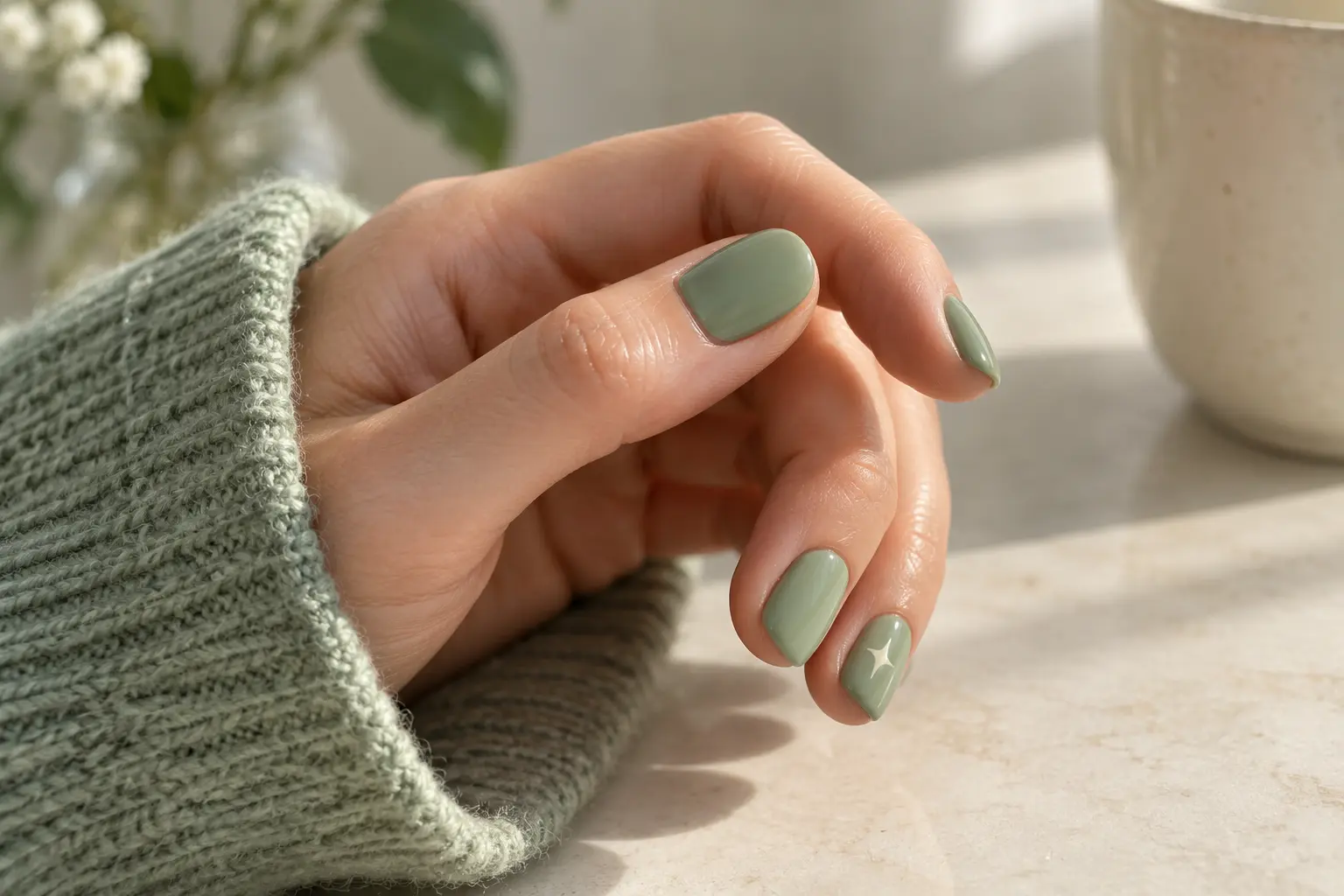
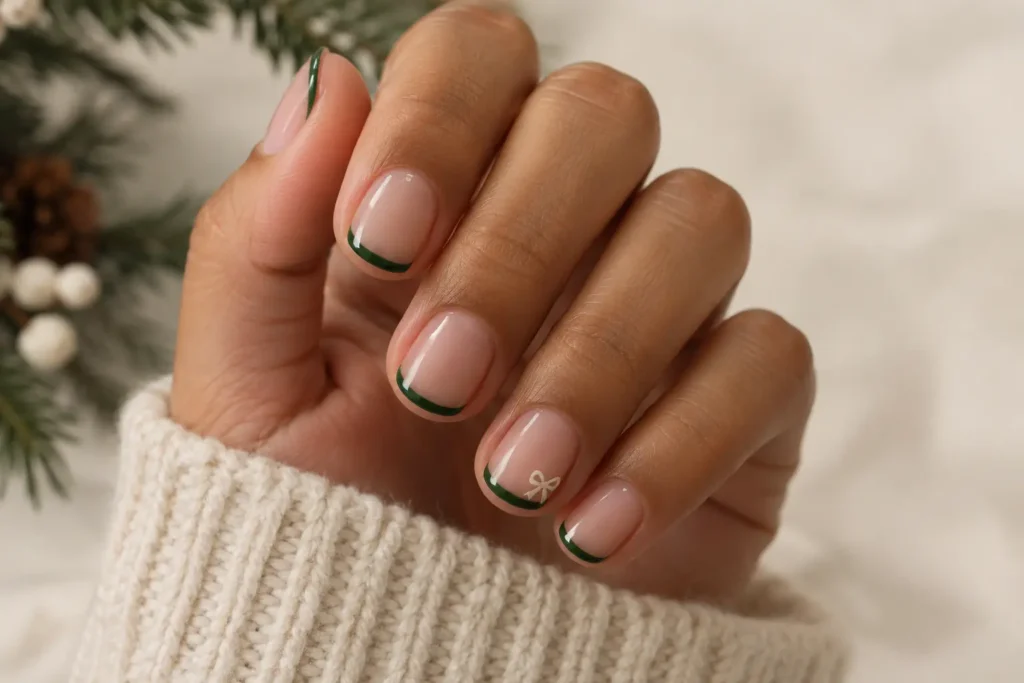
Soft contrast: sage with one cream star.
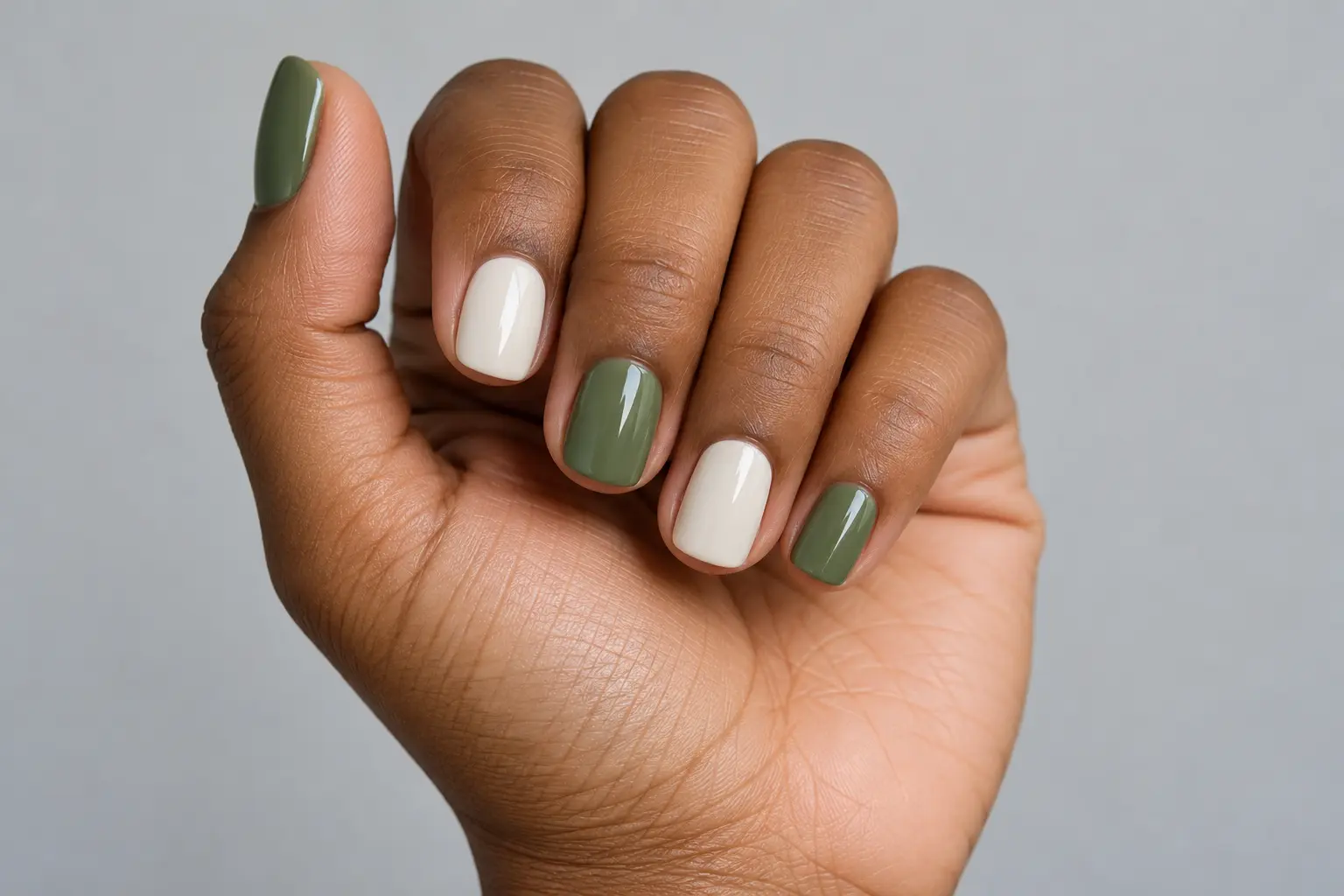
Graphic: alternating green and cream.
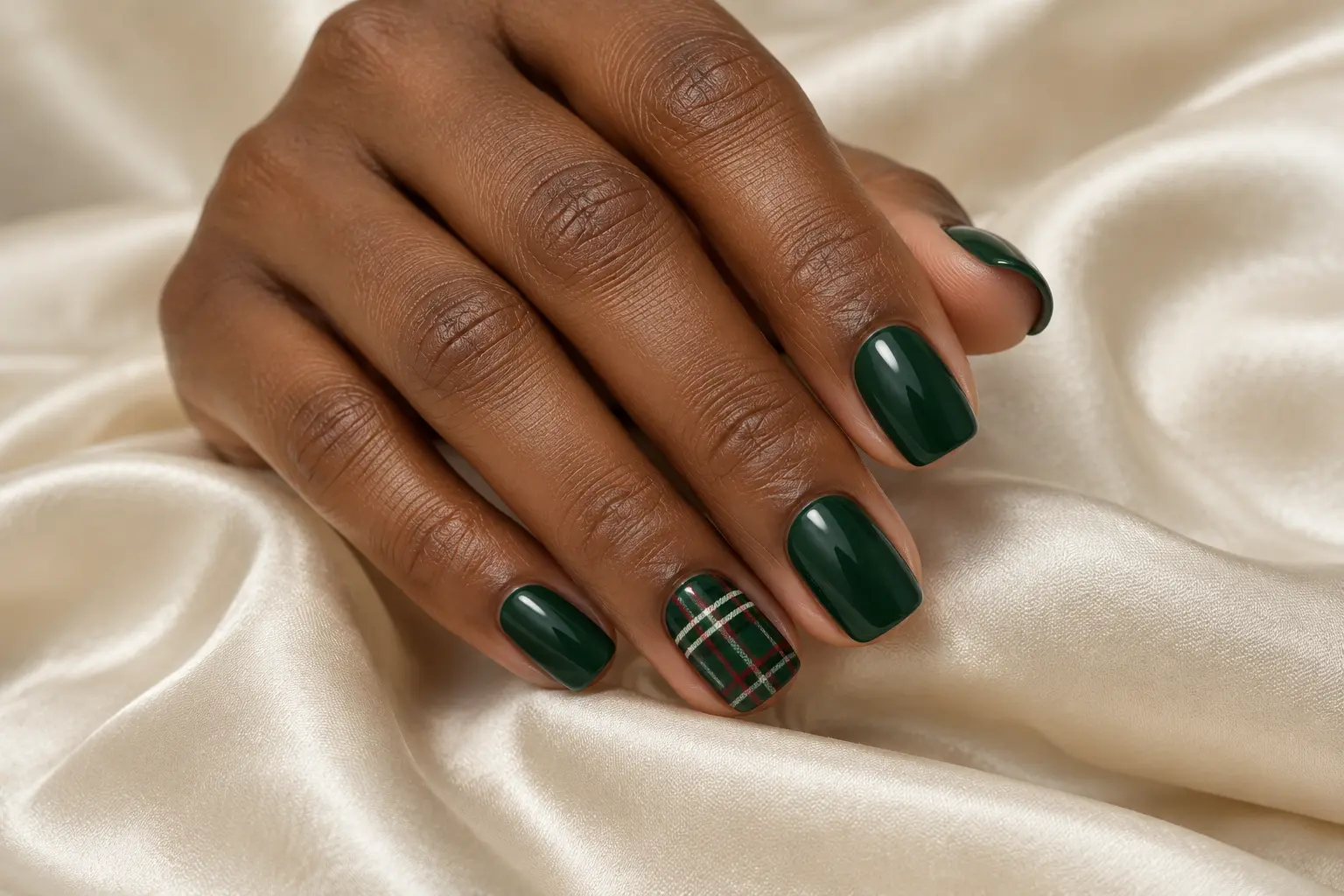
Traditional Christmas detail: forest with one plaid accent.
Shade names vary between brands. Compare the actual colour and finish before choosing.
Forest, emerald or sage: compare the shades
Compare two decisions: how light or dark the colour is, and how it reflects. A shade name alone does not tell you either reliably. Place swatches beside your hand, clothing or jewellery if matching those items matters to you.
Direction
What to compare
A detail to consider
What to check
Forest or very deep green
How much green remains visible in dim light
A fine pale or metallic line
Whether you like it when it reads almost black
Emerald or a clearer saturated green
The strength of colour beside the outfit
A quiet plain finish or one small accent
Whether shimmer changes the shade dramatically
Sage or a muted light green
Opacity and contrast against the natural nail
A restrained cream detail
Whether you prefer a sheer or opaque result
Use the suggested details as starting points, or wear the colour entirely plain.
Forest green when you want depth
A very dark green gives a compact manicure a strong colour block. Ask to see it away from a bright task lamp so you can judge how it looks during ordinary wear. If it appears nearly black, decide whether that is part of the appeal or a reason to choose a lighter green.
A narrow champagne line or small pale mark can create contrast. Keep the main colour visible if that is why you chose it. A full glitter overlay may change the effect enough that you should compare it as a separate finish.
For the outline, a short round or squoval shape can be a deliberate choice. Our short nail shape guide explains how the edge and available length affect the silhouette. The colour does not require a particular shape.
Emerald when you want the colour to lead
Let the emerald colour lead without adding a competing motif.
Use emerald as a starting word, then describe what you mean: clearer green, more blue-leaning, more yellow-leaning, brighter or deeper. Side-by-side swatches help you communicate more than repeating the same name.
Consider leaving most nails plain if the colour is already the statement. One small accent can provide a seasonal cue without changing the whole set into a pattern gallery. A quiet manicure beside a textured dress can be as deliberate as a decorated one.
If you want a reflective effect, identify the mechanism visually. Metallic polish, shimmer, glitter, magnetic finishes and chrome-like reflection are not equivalent. Ask what is feasible with the product system you want to wear and how it will be removed.
Sage when you want a softer contrast
Sage with a tiny cream detail offers a softer contrast than dark green.
A muted green can pair with a cream line or small white detail for a less saturated direction. Decide how much of the natural nail should show through. A sheer wash can look quite different from a creamy opaque shade, even when both bottles are labelled sage.
On a short nail, one fine corner accent may leave the colour clearer than a large central motif. Keep the detail simple enough to recognise without enlarging it across most of the nail.
Try the colour beside the actual fabric rather than assuming a pale green will be neutral against everything. Warm cream, silver and yellow gold each change the pairing. You are choosing a composition you like, not obeying a rule about matching metals.
Choose a tip, star or plaid accent
A bow, a fine tip, a branch-like accent and a small star can each communicate the occasion. Combining all four is a separate, busier design choice. Pick the one you would still want if the others were removed.
If the reference uses several shades, ask which contrast makes the pattern readable. A simplified plaid, for example, needs a clear relationship between its lines; adding every colour from the original fabric may not improve a small nail design.
A close-up photograph can make a reflective line look much larger and brighter than it appears at normal hand distance. Ask to view a swatch while moving it gently, then hold it still. The moving effect and the everyday resting appearance are both part of the choice.
Do not use a screenshot as a precise colour sample. Different lighting, editing and displays can shift the apparent shade. Bring it as a direction, and tell the professional what you like about it: the depth, the coolness, the amount of sparkle or the contrast.
A useful comparison has one plain swatch and one with the proposed effect. If the finish obscures the green you wanted, simplify it. There is no need to keep an extra layer simply because it was included in the first reference.
Turn the shade choice into a complete manicure
Forest gloss with a champagne edge
Choose a forest green that you enjoy in ordinary indoor light. Keep most nails solid and use a fine champagne edge on one or two. If the edge overwhelms the short nail, keep the accent to a small corner line instead.
Emerald with a plain finish
A clear saturated green can carry a whole set without artwork. Make the shine level part of the brief and bring a reference at your intended length. Use this option when your outfit already has sequins, embroidery or a strong print.
Sage with a small cream star
Use an opaque muted green and one small painted cream star-like mark. Keep enough unpainted base around it for the shade to remain visible. A flat painted detail and a raised ornament are different requests; tell the stylist which surface you want.
Green and cream, without mixing every finish
Decide the colour arrangement before painting and keep the finish consistent.
Alternate a single chosen green with a single cream if you like a colour-blocked set. Decide the finger arrangement before painting so it looks intentional. Keep the finish consistent while learning the palette, rather than adding matte, glitter and metallic detail at the same time.
Forest with a fine plaid nail
Use only the lines needed to make the small plaid recognisable.
Use plain forest on most nails, then ask for restrained cream and muted red crossing lines on one accent. A short nail needs a simplified pattern. If the first reference depends on many tiny intersections, ask which lines can be removed without losing the idea.
Take the strongest two options to the appointment. Choosing between a plain forest set and forest with one small plaid accent is easier than reconciling several photographs with different greens, lengths and product effects.
Before you paint or book an appointment
For a home regular-polish version, follow the manufacturer’s layering and drying directions. A thin plain colour with a modest accent can be a more manageable project than a specialist reflective finish. OPI’s lacquer application guidance is one brand-specific reference for that process.
If a salon system is involved, plan maintenance and removal along with the appointment. Do not pick a date solely because it is near Christmas; consider your first gathering and the time you can allow for the chosen service.
Keep a note with the final product shade, finish and accent placement if you want to repeat it. Write “forest green that still reads green indoors, glossy, current short length, one fine champagne tip” rather than only “Christmas green”. That small amount of precision makes the idea easier to reproduce without requiring an exact copy of a photograph.
Pairing green nails with your outfit
Take a small fabric reference, a photograph of the outfit or the jewellery you expect to wear. The aim is to judge the combination, not to find an identical green. A forest manicure against a cream jumper has a different balance from the same nails beside a dark velvet sleeve. Look at the hand from a normal distance before deciding whether an accent is needed.
If the outfit already has a busy print, start with one plain green. For a quieter outfit, a plaid accent or cream detail can provide the pattern. Gold and silver are both possible partners: compare the actual metallic finish against the chosen green instead of assuming that one metal must suit everyone.
For mixed metals, keep the nail art simple enough that the combination looks deliberate. A thin champagne line can sit between bright gold and silver more quietly than a large reflective embellishment. If matching accessories is becoming complicated, plain emerald or forest green is a complete design in its own right.
Adapting the designs to short nails
A green manicure does not need an extension to look festive. A narrow tip can follow a rounded edge, while a small star can sit slightly to one side of a short squoval nail. Leave visible space around the detail so it remains separate from the cuticle and free edge.
For plaid, ask to see a single practice nail at the intended length. Large crossing lines may work better than shrinking every stripe from a long-nail photograph. Keep the plain nails in the same green as the accent background so the set feels connected. Our short Christmas nail placement guide compares corner, tip and base accents in more detail.
If your nails vary in length, you can repeat the colour while adapting the motif. The smallest nail might stay plain, with the art on a nail that has more room. Matching the overall palette is often more useful than forcing an identical pattern onto ten different surfaces.
Common questions about green Christmas nails
Can green Christmas nails be understated?
Yes. Plain forest green, a sheer base with a fine green edge, or sage with one cream mark can all suggest the season without a full Christmas motif. Choose the amount of contrast you enjoy rather than adding more decoration automatically.
Do I need gel for these designs?
No single polish system is required for the colour ideas. A simple regular-polish version is possible where your chosen products and technique allow it. More specialised effects may use different systems. Compare application and removal in our gel versus regular polish guide before deciding.
Can I keep the design for New Year?
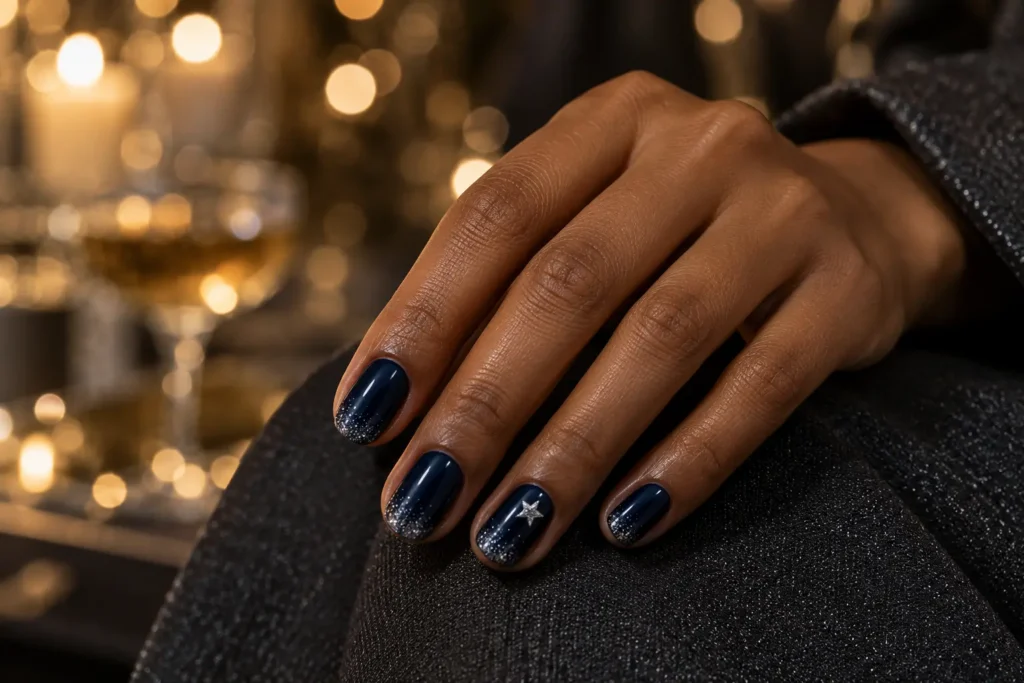
Choose a colour and finish you would still like after Christmas. Plain emerald, dark green with a metallic edge, and green-and-cream colour blocking are easy to style without a holiday symbol. For a more reflective direction, compare our New Year’s Eve nail ideas.
A little context, from the team
Zaki is a professional hairstylist and Rafaa is a professional nail stylist. Explore our guides for styling ideas, practical steps and details to help you choose your next look.
Explore 21 burgundy Christmas nails with chrome and gold details, including French tips, bows and snowflakes, with advice for choosing your holiday manicure.